Front doors
What is a pivot front door, and why choose one?
In short
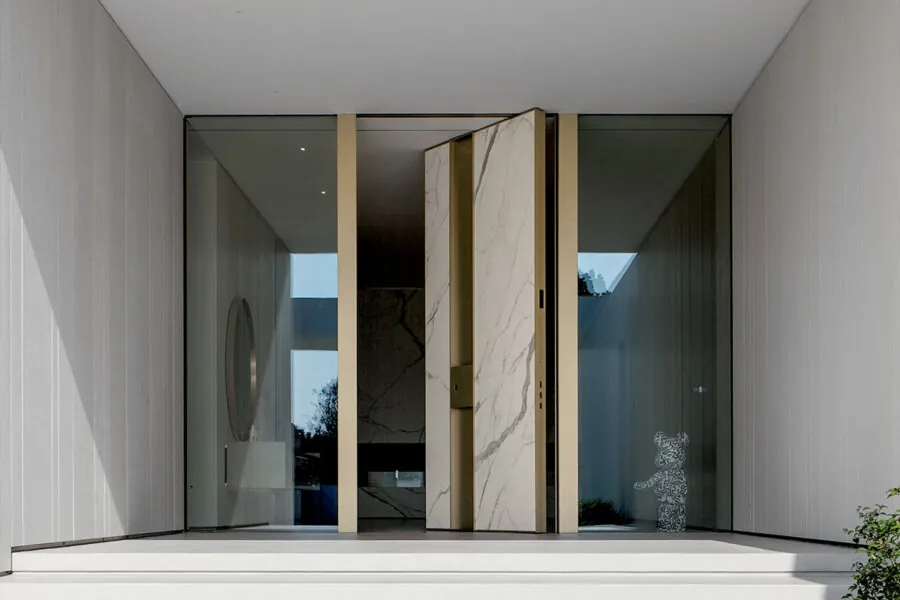
A pivot front door turns on a vertical axis through a pivot at the head and one in the floor, rather than on hinges along one edge. Because the bottom pivot carries the leaf down into the floor, a pivot entrance can be wider, taller and heavier than a hinged front door and still open with one hand. It is a mechanism, not a material: pivot front doors are built in steel or aluminium and rated accordingly.
Key takeaways
- A pivot front door turns on a pivot at the head and the floor, set in from the leading edge, so the weight of the leaf goes down into the floor instead of out through the frame.
- That load path is the whole reason to choose one: it allows a wider, taller and heavier leaf than a hinged front door, with large glazed or stone-faced panels.
- Security comes from the same doorset engineering as any other front door, with multi-point locking, a concealed pivot and a rating tested on the complete doorset.
- A pivot asks more of your floor, your structure and the space either side of the opening, so it suits a new build, a renovation or a generous entrance more than a tight like-for-like swap.
A pivot front door is an entrance door that turns on a pivot in the head and the floor, set in from the leading edge, instead of hanging on hinges at the jamb. The weight runs down into the floor rather than out through the frame, which is what lets a pivot leaf be much larger than a hinged one.
Two things to clear up before the detail. The same word is used for the pivot doors in shower enclosures, and this guide is not about those. And a pivot is a mechanism rather than a material: our pivot front doors are built in steel or in aluminium, and the security specification follows the material you choose. Pivot sits alongside hinged steel, aluminium and bespoke doors among the front door formats we fit across London.
How is a pivot front door different from one on side hinges?
The difference is where the door is held, and where its weight ends up.
A hinged front door hangs on hinges fixed along one edge. Every kilogram of the leaf is carried by those hinges and passed sideways into the frame and the wall beside it. The door swings about that edge, so the whole leaf moves to one side of the opening.
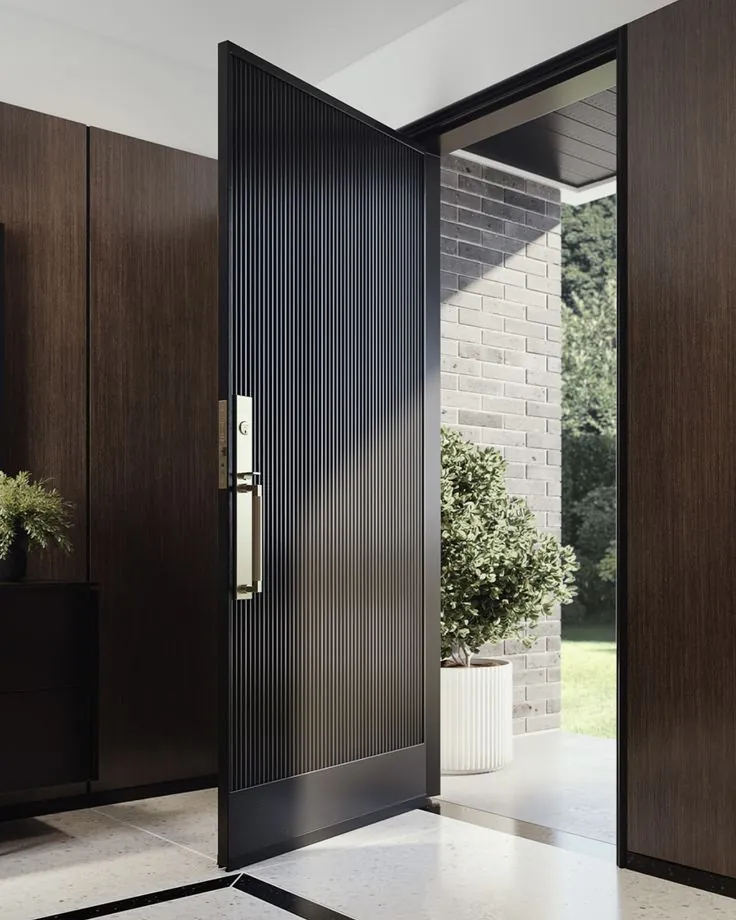
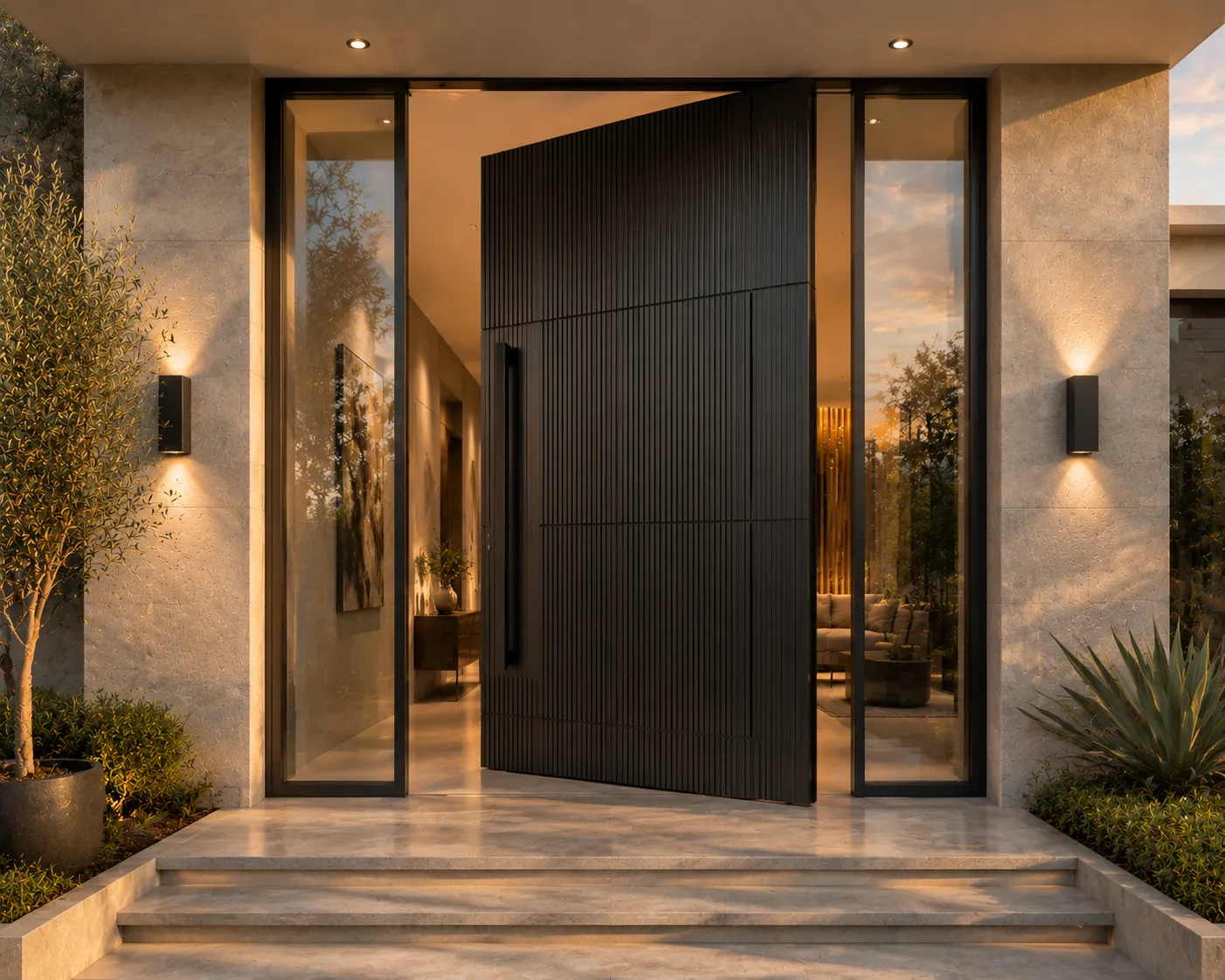
A pivot front door turns on a vertical axis running through a pivot at the head and a pivot in the floor. That axis sits in from the leading edge, not on it. Two things follow. The leaf rotates rather than swinging: as it opens, the larger part of the door moves one way and the smaller part moves the other. And the load path changes: the bottom pivot carries the weight of the leaf straight down into the floor structure, so the frame is holding the door in position rather than holding it up.
That is why the visual reads differently too. There are no hinge knuckles on the face, and the shadow gap runs evenly all the way round the leaf.
As a general point of engineering, residential entrance pivots are normally offset, with the axis inset from the leading edge, while centre-hung pivots that swing symmetrically both ways are mainly an interior and commercial format.
What does a pivot let you do that a hinged front door cannot?
Scale, in three directions, and all three come from the same load path.
Width. A hinged leaf gets harder to hang the wider it gets, because the leverage working on the top hinge grows with it. A pivot does not fight that in the same way, because the weight is going down rather than out. Wide single leaves become practical.
Height. The same logic applies to tall openings, which is why pivots turn up on double-height halls and alongside full-height glazed screens.
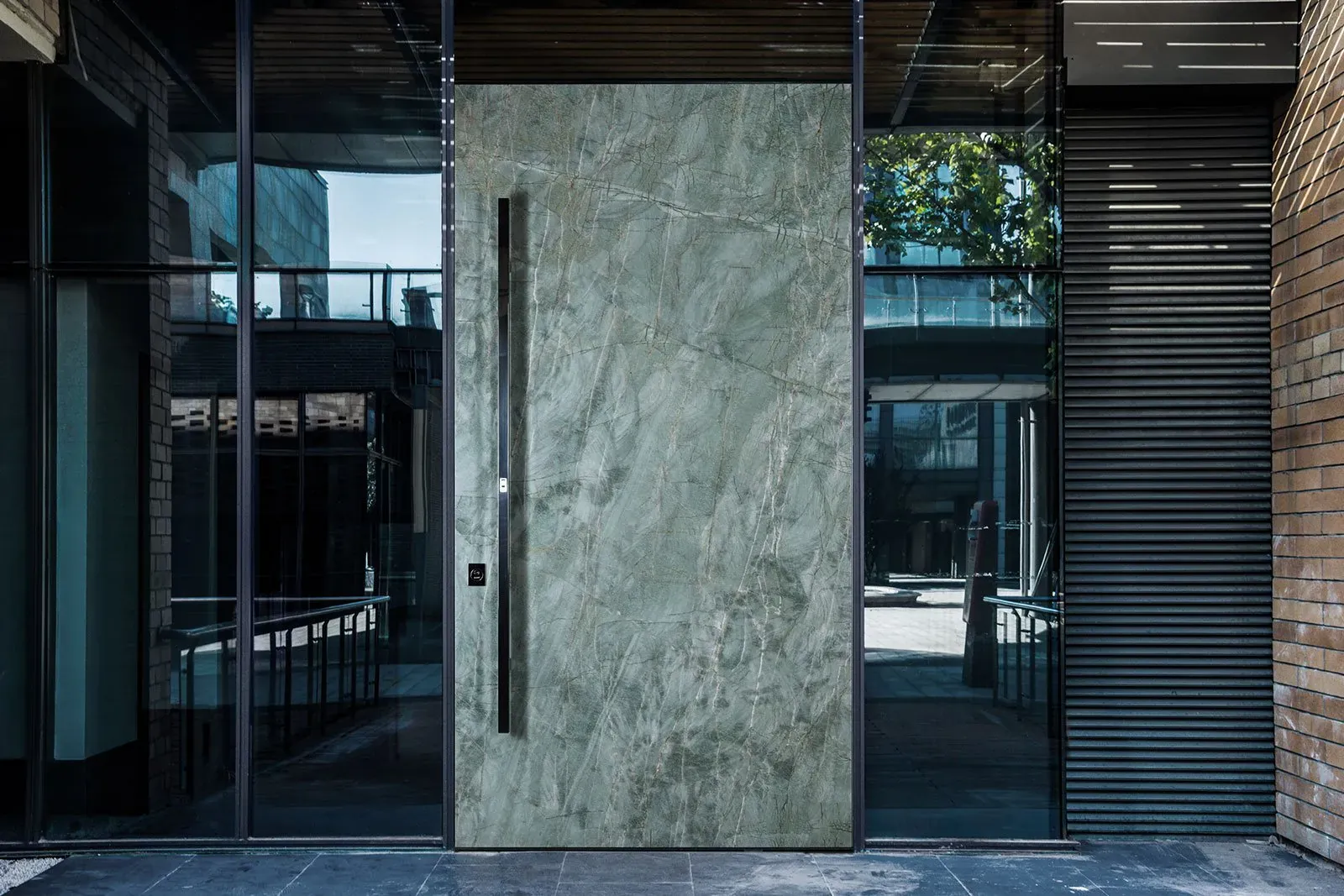
Weight. A heavier build is possible: a thicker leaf, a denser core, stone-effect and metal facings, and large glazed panels held in the doorset. A well-balanced pivot still opens with a light push, because the pivot is carrying the mass rather than resisting it.
There is a quieter advantage as well. Because the axis is set in from the edge, the leaf does not project as far beyond the frame as a hinged door of the same width would. It still needs clear space on both sides, but it needs less room in front.
Aluminium is the usual choice where the design wants slim sightlines and a lot of glass, and it gives a lighter leaf for a given size: see the aluminium front door range. Where the opening or the design is a one-off, a pivot can be drawn from scratch as a made-to-measure front door.
Are pivot front doors secure, and how is that tested?
Yes, and the answer does not rest on the pivot. It rests on the doorset, the same way it does for any other front door.
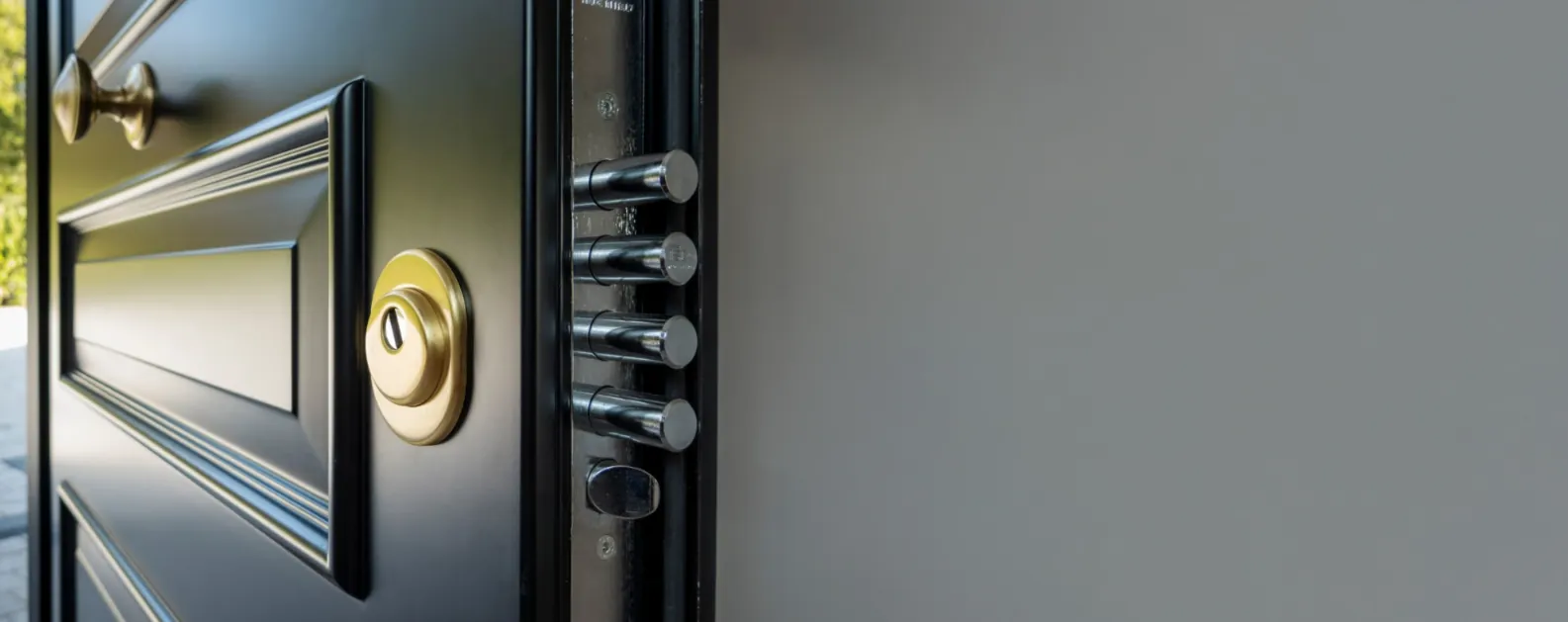
Scale is not a weakness here. A larger door is built on a heavier frame with more locking points, not fewer, so it holds the line across the full perimeter. The multi-point lock engages at the top, the side and the base together. Anti-drill and anti-pick cylinders are specified at the survey. The pivot mechanism itself sits concealed and tamper-resistant, so there is no exposed hardware to attack.
The ratings follow the material. Steel pivots are built and tested to SR3 under LPS 1175, the independently tested UK forced-entry standard. Aluminium pivots are built and tested to RC3 under BS EN 1627, with RC4 where the specification calls for it. PAS 24 and Secured by Design configurations are available on request. What each standard actually measures is set out on our certifications page, and the graded scale behind the steel figure is explained in our guide to LPS 1175 security ratings.
One point is worth carrying into any showroom. A security rating is a laboratory result for a complete doorset in a tested configuration and size range, not a description of a mechanism. So the question to ask about a large pivot with glazed side panels is whether the certificate covers the size and the glazing you are ordering, not whether the company holds a rating somewhere in its range.
Do pivot front doors keep the weather out?
They do, when the sealing and the threshold are specified for the size of the leaf.
The concern behind the question is a fair one. A large door has a long perimeter, so there is more sealing to get right. And the pivot side of the leaf sweeps past the frame as it turns rather than closing into a rebate the way a hinged edge does, so that edge is detailed differently from the other three.
Our pivot doors close on a full perimeter brush and gasket seal onto a flush, weather-rated threshold. The leaf is built with an insulated core, and in aluminium the frame is thermally broken, which together give a U-value as low as 0.8 W/m²K. The figure for your door is confirmed at the survey, because it depends on the size, the glazing and the specification you settle on.
What does a pivot front door need from your floor and structure?
More preparation than a hinged door, and it is far easier to settle before the floor is finished than after.
- The floor under the pivot. The bottom pivot takes the weight of the leaf as a concentrated load in one place, so the substrate under it has to be sound and level, and able to carry it.
- The structure above. The head pivot is fixed into whatever is over the opening. A lintel or frame head that can take the restraint load is part of the design, not an afterthought.
- Threshold levels. A flush threshold means the finished floor levels inside and outside have to be set together, which is a decision for the build programme rather than the fitting day.
- Anything already in the floor. If there is underfloor heating or a service run near the opening, a recessed pivot has to be coordinated with it.
None of this makes a pivot a new-build-only product. It does mean the survey carries more weight than usual: we measure the structural opening, check the threshold and the head, and confirm the requirement in writing before anything is ordered.
When is a pivot the wrong choice for a front door?
Four situations, and a good installer will say so rather than sell you one anyway.
- A standard-width opening. The advantages of a pivot are advantages of scale. On an ordinary opening you take on the floor work and the engineering without the result that justifies them, and a hinged steel or aluminium front door does the job better.
- No clear sweep either side. The leaf rotates, so it needs room on both faces. A shallow porch, a hall that opens straight onto stairs, or a radiator behind the door can all rule it out.
- A period frontage that wants a milled panelled profile. Milled profiles, the Georgian, Victorian and Edwardian faces that make a metal door read as painted timber, are a steel and made-to-measure option rather than a pivot one. If that look is the point, start with steel front doors.
- Where budget is the binding constraint. Pivot doors sit at the upper end of our range, because of the scale and the engineering in the pivot. What actually drives the cost of any front door is set out in our London front door cost guide.
If you are still weighing up material and look before you get to the mechanism, our guide on choosing a secure front door without compromising on design works through the decision in order.
Is a pivot right for your entrance?
The honest answer depends on the opening, the floor and the space either side of it, which is why we measure before we quote. A free site survey establishes whether a pivot will work where you want it, what the floor and structure need, and what the alternative would be if it will not.
Book a free site survey, or see the pivot range first. We survey, supply and install across London and the Home Counties, with one team on the job from the first visit to the last.
Frequently asked questions
- Is a pivot front door the same as a pivot shower door?
- No. They share a word and nothing else. A pivot shower door is a glass panel on a small enclosure hinge or pivot. A pivot front door is a full entrance doorset, built in steel or aluminium, turning on a load-bearing pivot at the head and in the floor and carrying a multi-point lock and a security rating.
- What are the disadvantages of a pivot front door?
- Three, mainly. It needs clear sweep space on both sides of the opening, because the leaf rotates about an axis set in from the edge. It needs preparation to the floor and the structure above, which is simpler to do during a build or renovation than as a straight replacement. And it sits at the upper end of the range, because of the scale and the engineering in the pivot.
- Do pivot front doors open inwards or outwards?
- Both at once, in a sense. Because the axis sits in from the leading edge, the larger part of the leaf swings one way while the smaller part swings the other. Which side is the main opening is set at the survey, along with the handing and the clear opening width you need.
- Does a pivot front door need work to the floor?
- Usually some. The bottom pivot carries the weight of the leaf into the floor, so the substrate under it has to be sound, level and able to take a concentrated load, and a flush threshold means the finished floor levels inside and out have to be set together. The survey establishes what your opening needs before anything is ordered.
- Can a pivot front door be fitted to an existing house?
- Yes, and most of ours go into renovations rather than new builds. The deciding factors are the size of the structural opening, what is under the threshold, whether the structure above can take the head fixing, and how much clear space there is either side. All four are checked at the free site survey.
- Should a pivot front door be steel or aluminium?
- Steel where the priority is the higher security rating, aluminium where the design wants slim sightlines, large glazed panels or a lighter leaf for a given size. Steel pivots are built and tested to SR3 under LPS 1175 and aluminium to RC3 under BS EN 1627, with RC4 where the specification calls for it, so both are rated choices.