Front doors
How do you choose a secure front door without compromising on design?
In short
Choose the security level first, then the design. Ask for a door tested to a named standard (PAS 24 as the baseline, LPS 1175 SR3 for steel or RC3 for aluminium where the risk warrants it, Secured by Design where an insurer asks for it), then pick the material, profile, finish, glazing and hardware from the ranges that hold that rating. A made-to-measure steel or aluminium door can be milled and finished to look like any period or contemporary door, so the design compromise most people fear does not have to exist.
Key takeaways
- Decide the security rating before the look: PAS 24 is the baseline, LPS 1175 SR3 (steel) or RC3 (aluminium) is the step up for higher-risk homes, and Secured by Design is what many insurers reference.
- Steel and aluminium both reach independently tested ratings that composite does not, and both can be milled, glazed and finished to suit a period or modern frontage.
- The design decisions that matter are frame sightlines, milling profile, finish colour, glazing and hardware, and none of them need to weaken a certified door.
- Ask any installer for the named standard, the certifying body and who carries out the survey and installation, then get a written quote after a site survey.
You do not have to choose between a secure front door and a good-looking one. The way to get both is to settle the security rating first, then choose the material, profile, finish, glazing and hardware from the ranges that hold that rating. Certified steel and aluminium doors are made to measure, so the look is set by you rather than by what a stock range happens to offer. This guide walks through the decision in that order, from certification to survey.
Which security certification should you look for first?
Start with a named, independently tested standard, because that is the only thing that separates a secure door from a door that is described as secure.
PAS 24 is the baseline. It is the British standard for enhanced security performance of a complete doorset, meaning the leaf, frame, hinges, locking points, seals and glazing are attacked, loaded and tested together as one unit. If a door has passed PAS 24, it has held up against a defined set of physical attacks under controlled conditions. It is also the standard usually referenced in planning conditions for new homes in England, so architects and planning officers tend to mean PAS 24 when they ask about security certification.
LPS 1175 is the step up for steel. Published by the Loss Prevention Certification Board, it grades a product by the tools used against it and how long it resists. For a home, SR3 is the level to ask about: it resists a determined, tooled attack rather than an opportunist push. Our steel front doors are built and tested to SR3, with SR4 available where the risk warrants it. The full scale is explained in our guide to LPS 1175 security ratings.
RC3 to RC4 under BS EN 1627 is the parallel scale for aluminium and pivot doors. RC3 is the level that resists a determined attacker with tools, and RC4 adds heavier tooling and longer resistance.
Secured by Design is the UK police initiative. It is not a separate test so much as a certification that a product has passed a recognised standard, PAS 24 or equivalent, with an accredited body. Many home insurers reference it by name. Secured by Design configurations are available on request across our range, and the standards each door is tested to are set out on our certifications page.
The practical rule: ask for the standard, the level and the certifying body. A supplier who can name all three has a door you can verify. A supplier who says “high security” and stops there does not.
Steel, aluminium or composite: which material gives you both?
Steel and aluminium both reach independently tested ratings and both are made to order. Composite is a reasonable lower-cost replacement, but it does not reach the higher LPS 1175 levels because its strength sits in a reinforcing plate at the lock rather than in the whole leaf. We compare the two in detail in composite vs steel doors.
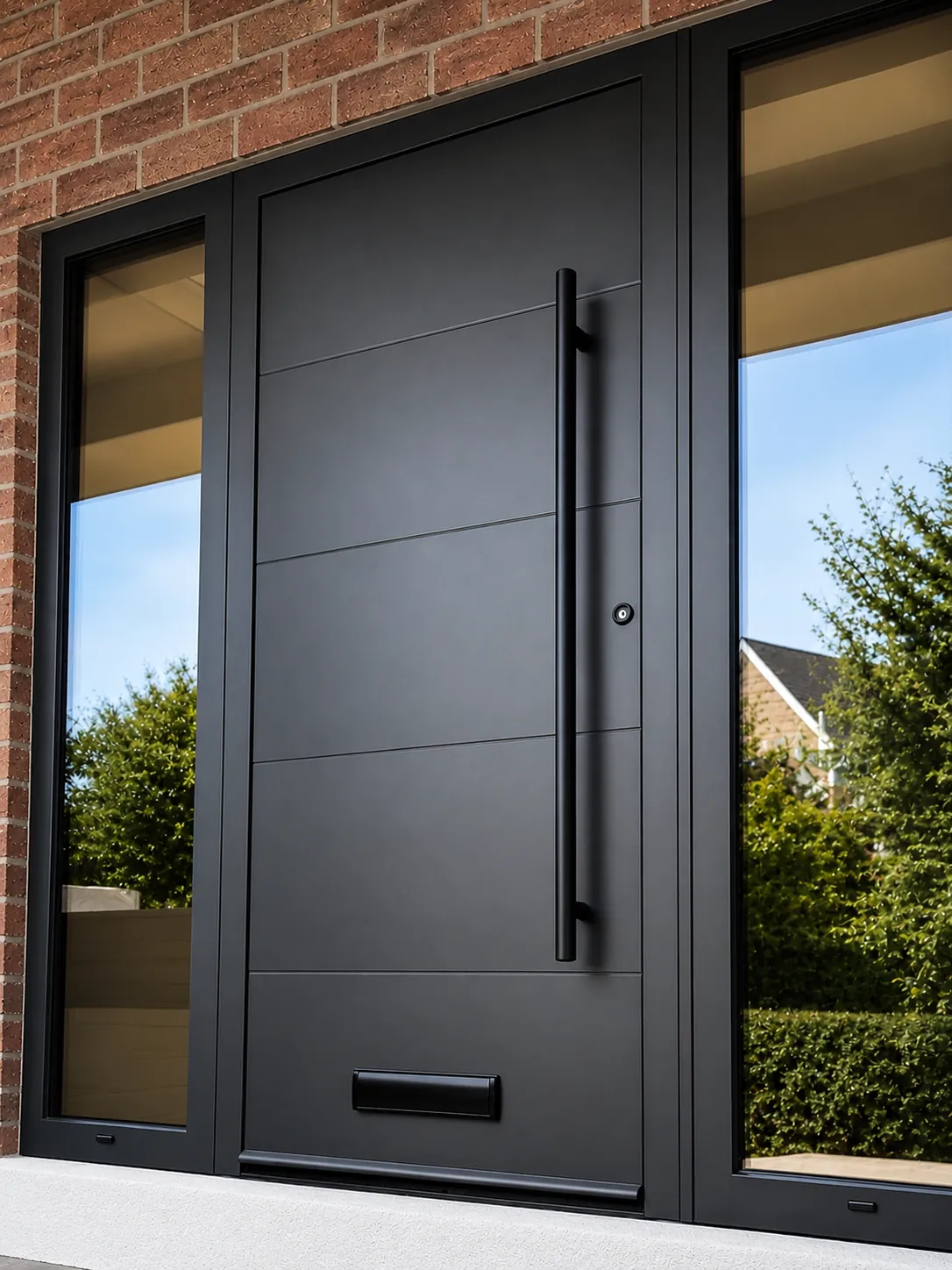
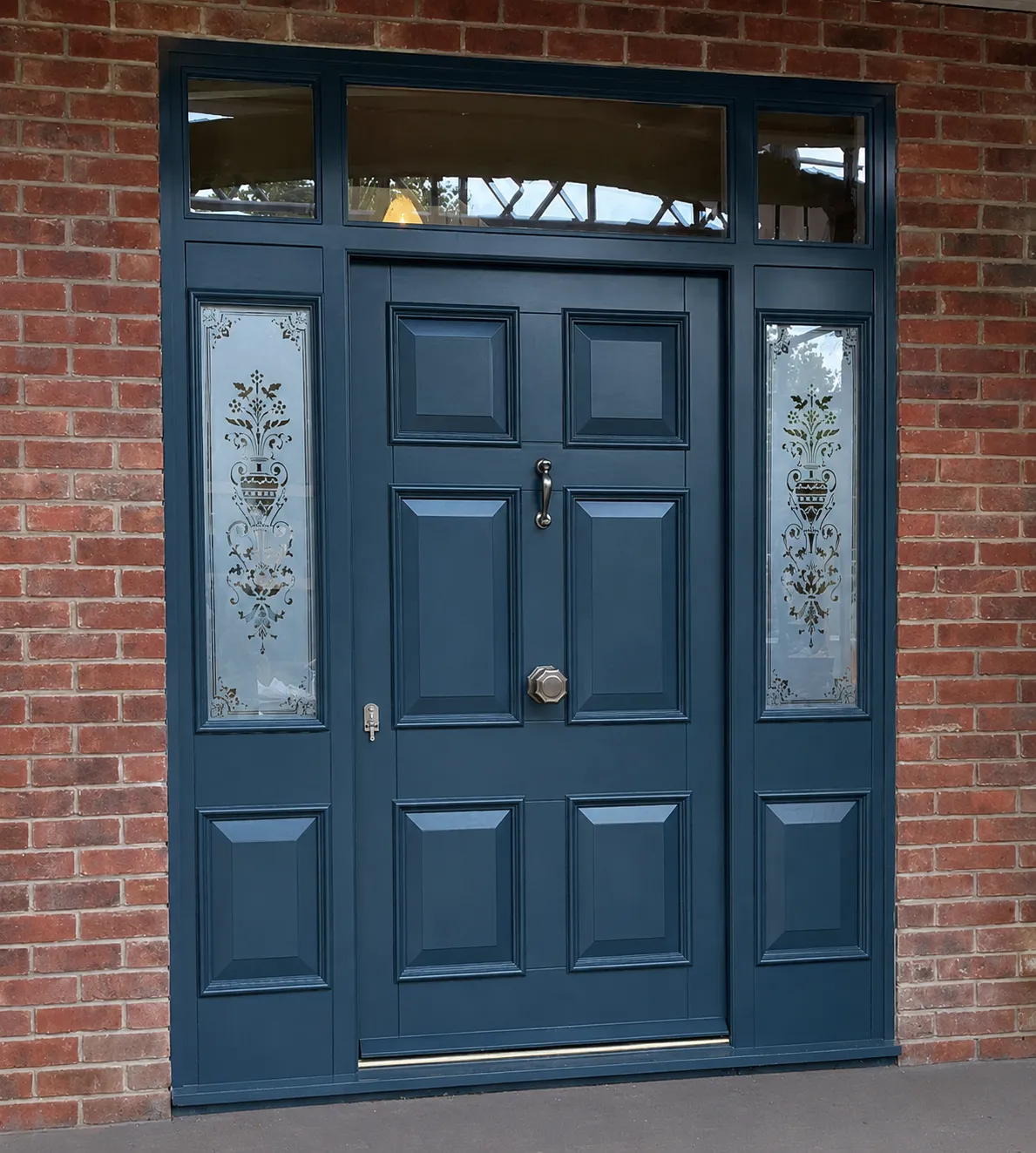
Steel is the choice for higher-risk properties and for period frontages. The leaf and frame are galvanised steel with an insulated core, tested to LPS 1175 SR3 to SR4. Because the door is milled to order, the profile can follow a Georgian six-panel, a Victorian four-panel, an Edwardian glazed top or a clean contemporary face. Powder coated in any RAL colour, it reads as a painted timber door from the pavement.
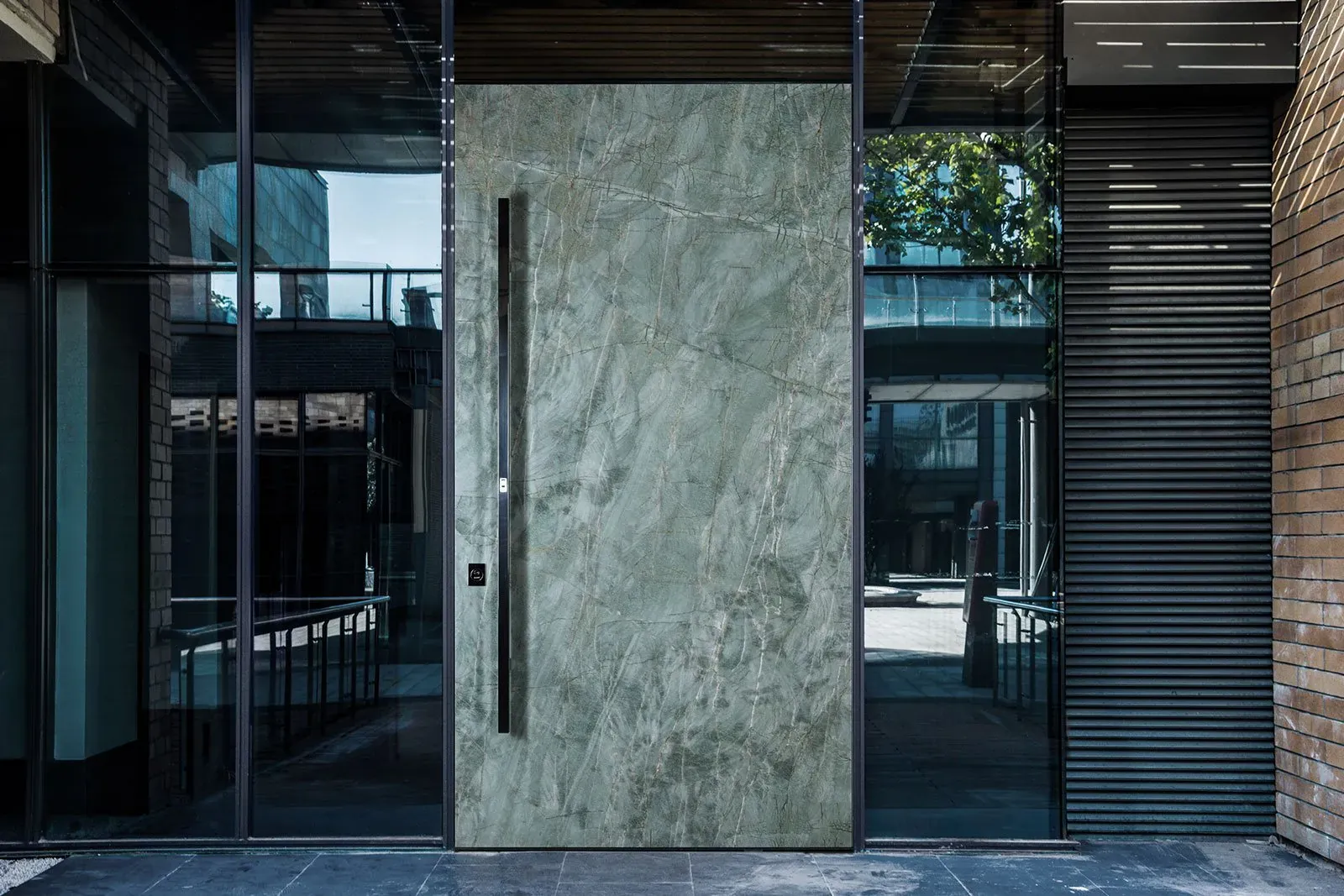
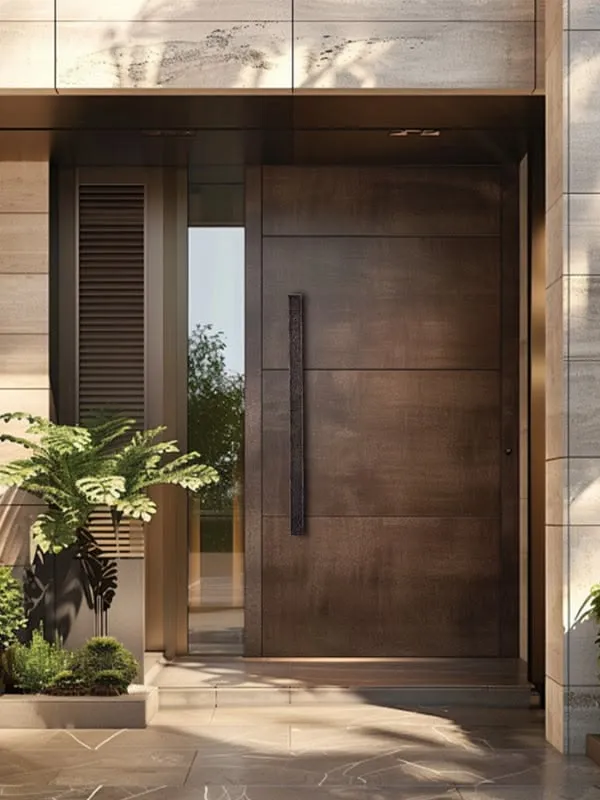
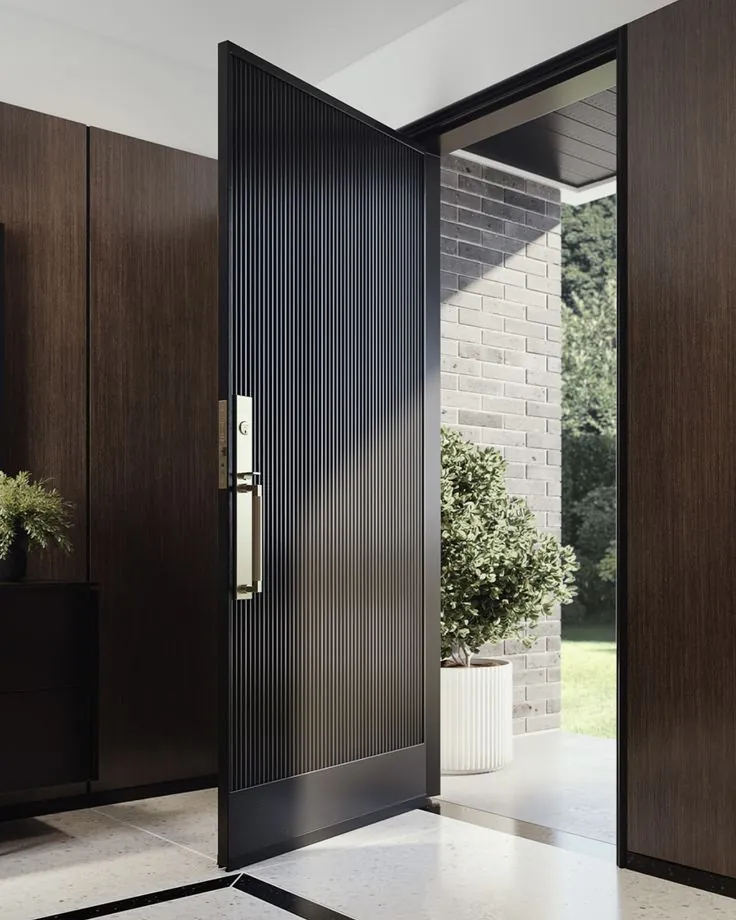
Aluminium is lighter and suits a modern look: slim frames, large glazed panels, flush faces, and the pivot format. Our aluminium front doors are rated RC3 to RC4 and finished in any RAL colour, inside and out, with wood-effect finishes available, so a walnut or oak look is possible without the maintenance of timber.
Bespoke covers anything that does not fit a standard format: unusual openings, double leaves with sidelights and transoms, arched fanlights, or a design of your own. Our custom front doors are built to the opening and to the rating, not the other way round.
If you want a period look on a house with a higher risk profile, steel is usually the answer. If you want slim sightlines and a lot of glass on a modern extension, aluminium usually is. Neither choice asks you to give up the rating.
Which design details actually matter?
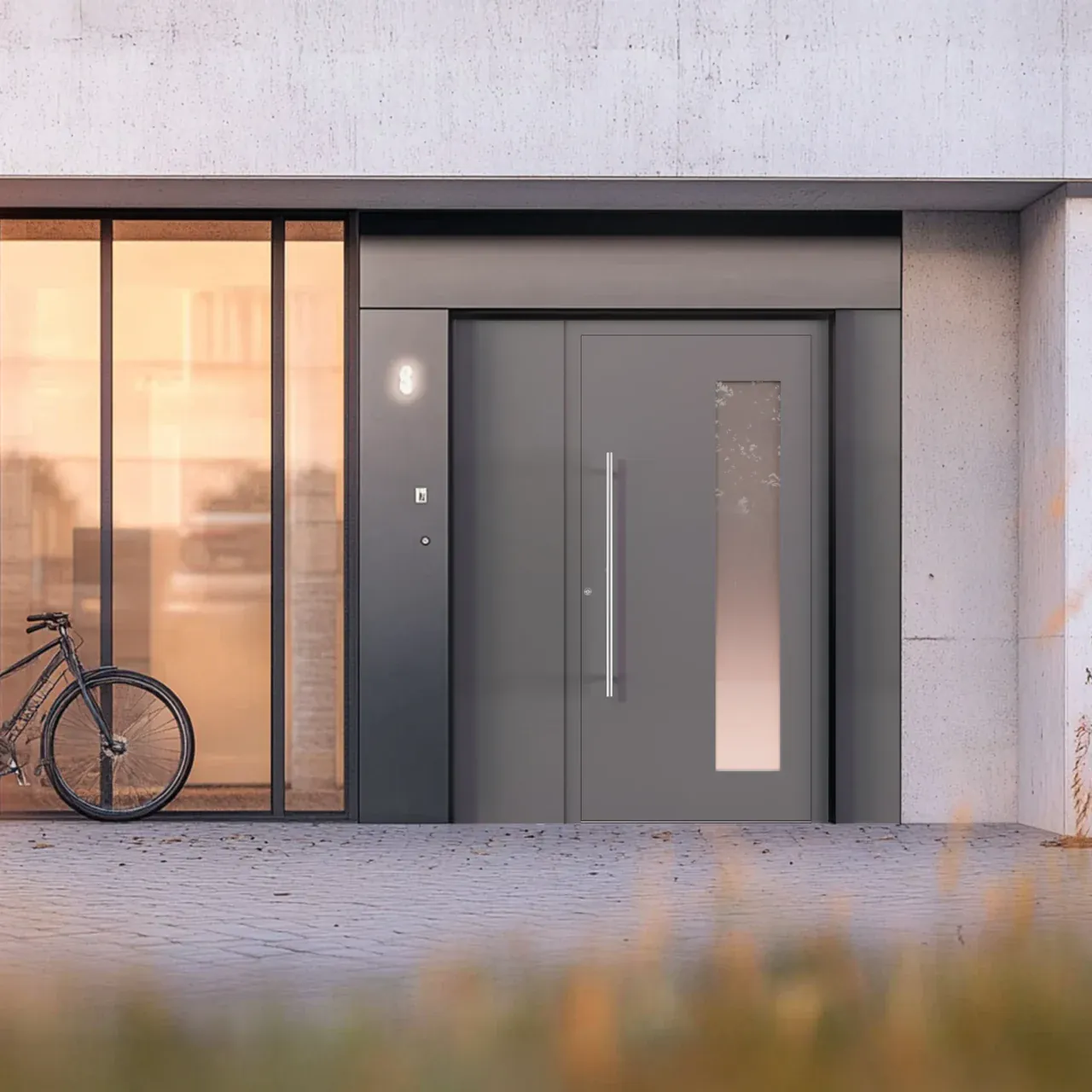
Five decisions set the look of a front door. None of them need to weaken a certified one, provided they are specified as part of the tested doorset.
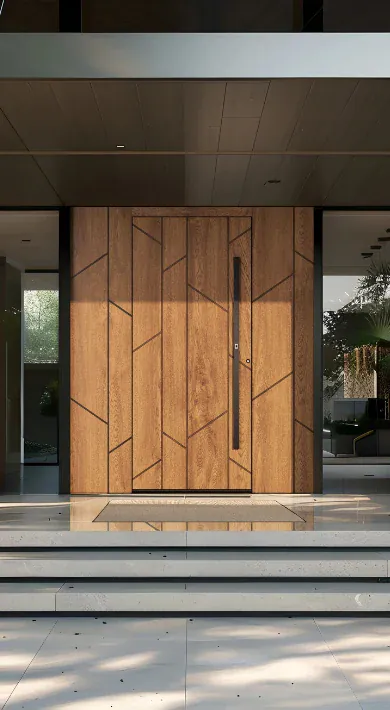
- Frame sightlines. A slim frame reads as modern and lets the leaf carry the design. Aluminium gives the slimmest sightlines; steel frames can be dressed with architrave or set back in the reveal to keep the visible frame narrow.
- Milling profile. The pattern cut into the face of a steel door. Georgian, Kensington, Victorian, Edwardian, Cottage, V-groove and half-moon profiles are all available, and a flush face is an option too. This is what makes a steel door look like a timber one.
- Finish. Any RAL colour on steel or aluminium, inside and out, with wood-effect finishes on aluminium. Black and anthracite are the finishes we fit most, and they suit both period brick and rendered modern frontages.
- Glazing. Sidelights, transoms, fanlights, vision panels and etched or obscured glass are all possible. The condition is that the glass is laminated security glazing tested as part of the doorset. Ask whether the certificate covers the glazed configuration you want.
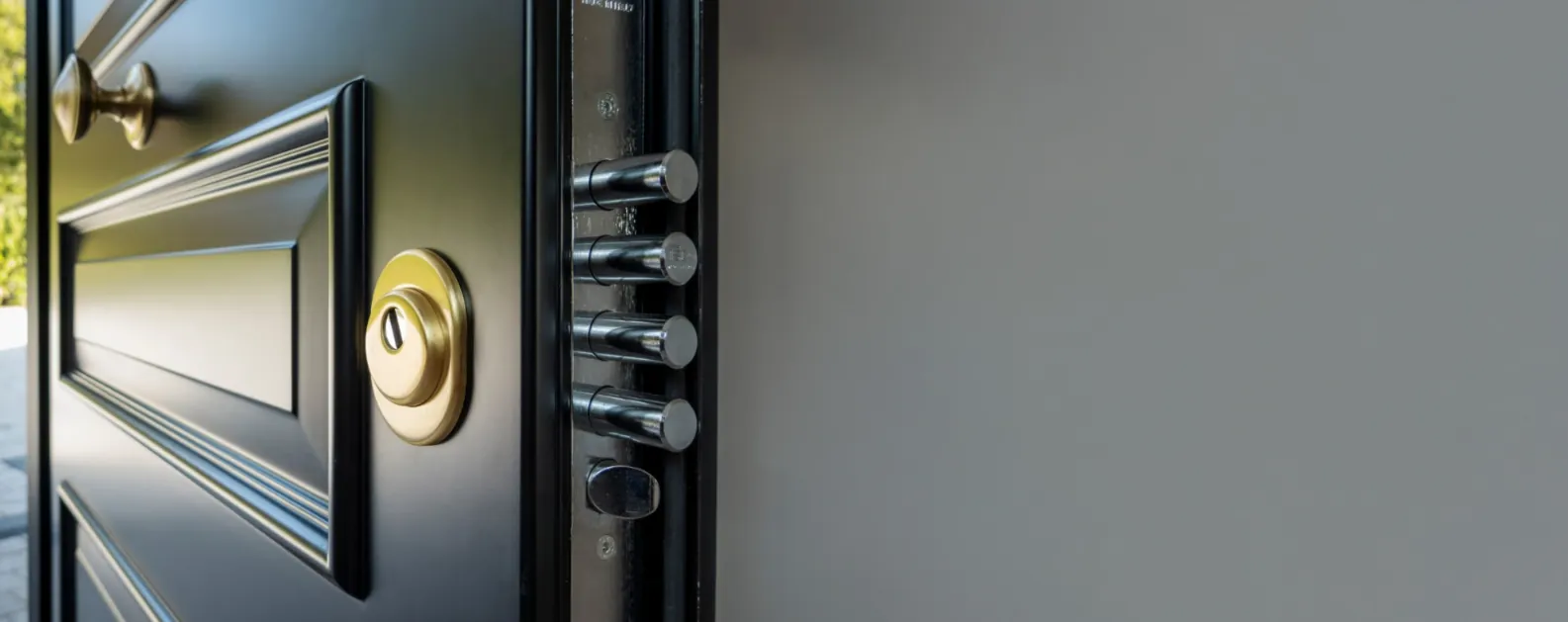
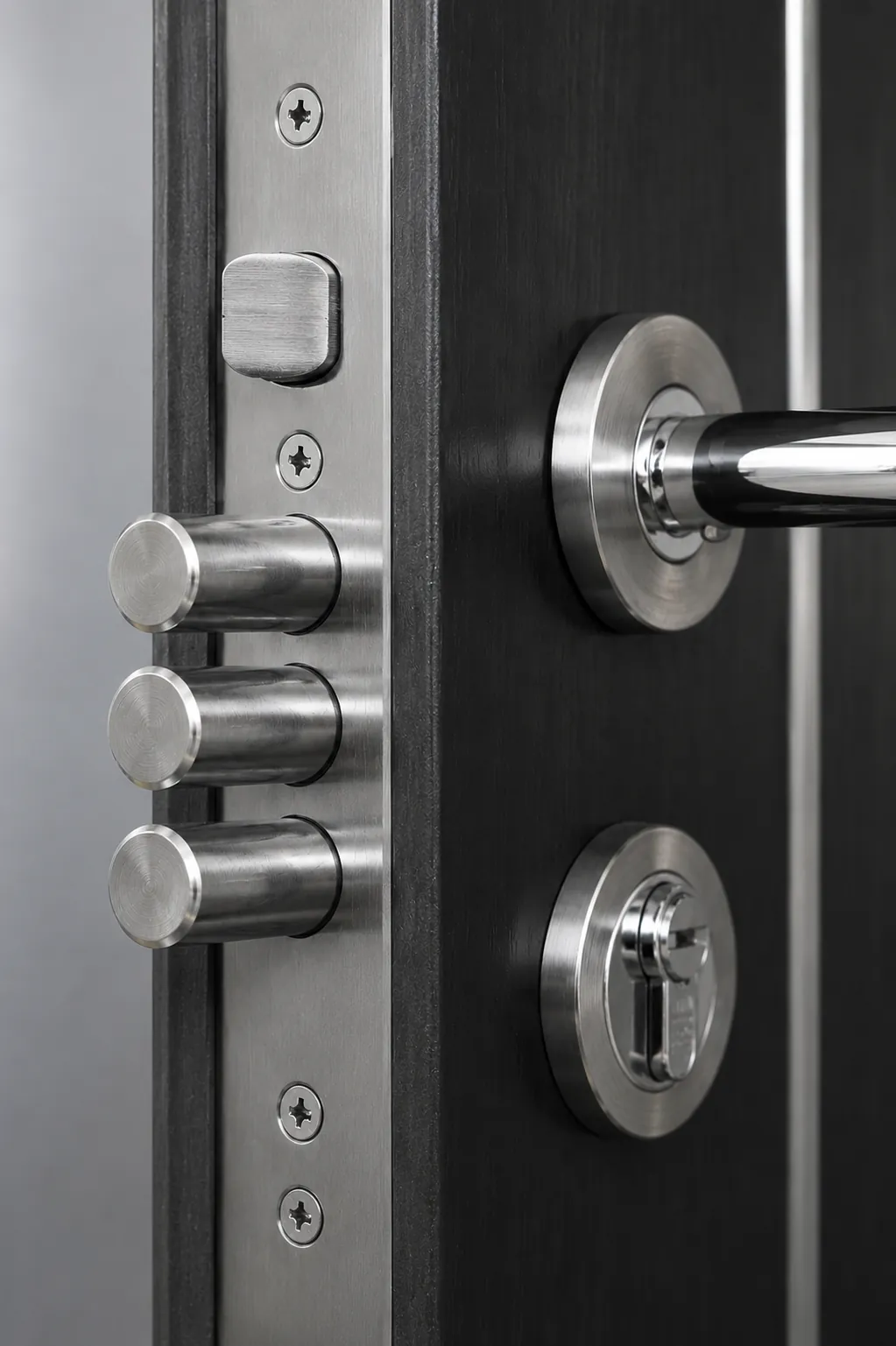
- Hardware. Pull handles, lever sets, knobs, knockers, letterplates and escutcheons in brass, nickel, chrome, bronze or black. Hardware is where a door picks up its character, and on a certified door the visible furniture sits over a multi-point lock and an anti-snap cylinder that do the actual work.
The point is that these are aesthetic choices layered onto a tested construction. Decide the rating, then enjoy the design.
What should you ask an installer before you commit?
Five questions sort a serious installer from a reseller.
- Which standard is the door tested to, at what level, and by which body? Expect a named standard and a certificate, not an adjective.
- Does the certificate cover my size and configuration? A rating applies to a tested size envelope and build. Sidelights, double leaves and large glazed panels should be within it.
- Who surveys and who installs? A door is only as secure as its fixing into the wall. Ask whether the people who quote it are the people who fit it.
- What does the quote include? Survey, leaf, frame, threshold, locking, cylinder, hinges, glazing, removal of the old door, installation and making good. A supply-only price is not a comparable number.
- What happens if the opening needs work? Lintels, rotten sub-frames and out-of-square reveals are common in older London houses. The answer should be a plan, not a shrug.
What should a site survey cover?
A site survey is where the rating and the design meet the actual house. It should cover:
- The structural opening, reveal depth and threshold, measured on site rather than estimated from a photograph.
- The condition of the lintel and existing frame, and whether the sub-frame needs replacing.
- Your risk level: the property, the street, any previous incident and any requirement your insurer has set.
- Swing direction, access for delivery, and whether the door needs to open outward, inward or pivot.
- Your design choices recorded in writing: material, profile, colour, glazing, hardware finish and any sidelight or transom.
From that survey comes a written quote with the price fixed before the order. That is the sequence we follow on every job: survey, design, manufacture, install, aftercare, with one team answering for the whole thing.
Ready to choose?
If you know the look you want and are unsure which rating suits your home, a free site survey is the practical next step. We measure the opening, assess the risk, and recommend the standard that fits, then show you the profiles, finishes and hardware that hold it.
Book a free site survey, or browse the steel, aluminium and bespoke ranges first.
Frequently asked questions
- What certification should a secure front door have?
- Ask for a door tested to a named standard. PAS 24 is the baseline enhanced-security standard for a complete doorset. LPS 1175 grades steel doors by resistance level, with SR3 the right level for most homes. Aluminium and pivot doors are rated RC3 to RC4 under BS EN 1627. Secured by Design is the police-backed certification many insurers reference and is available on request across our range.
- Can a security door look like a normal front door?
- Yes. A made-to-measure steel door can be milled to a Georgian, Victorian, Edwardian or contemporary profile and powder coated in any RAL colour, so from the street it reads as a panelled timber door. Aluminium and pivot doors give a slim-framed modern look with the same made-to-order flexibility.
- Is steel or aluminium better for a front door?
- Steel reaches the higher LPS 1175 ratings and suits period profiles and higher-risk properties. Aluminium is lighter, holds RC3 to RC4 ratings and suits slim frames, large glazed panels and pivot formats. Both are secure choices; the right one depends on the look you want and the rating your property needs.
- Does glass in a front door make it less secure?
- Not if the glazing is part of the tested doorset. Certified doors use laminated security glass held in a reinforced frame and tested as one unit, so sidelights, transoms and glazed panels are all possible without dropping the rating. Ask whether the glazing was included in the test, not just the leaf.
- What questions should I ask a front door installer?
- Ask which standard the door is tested to and by which body, whether the certificate covers the size and configuration you are ordering, who surveys and who installs, what the quote includes, and what happens if the frame or reveal needs work. A good installer answers all five without hesitation.
- What does a front door site survey cover?
- A proper survey measures the structural opening and reveal, checks the lintel, frame condition and threshold, assesses your risk level and any insurer requirement, confirms swing direction and access, and records your choices for profile, finish, glazing and hardware. The written quote follows from that, not from a phone estimate.