
Front doors
Steel or aluminium: which is right for a London home?
In short
Choose steel when the frontage needs a panelled, milled face, or when the security bar has to reach LPS 1175 SR4 or a bullet-resistant or blast-resistant build. Choose aluminium when the entrance is mostly glass, when you want slim sightlines, or when the design wants a pivot. Thermal performance and upkeep are close enough on both that they should not break the tie.
Key takeaways
- Milling is a steel option. If the house needs a Georgian, Victorian or Edwardian panel profile, that is the decision made.
- Aluminium carries the larger glazed panels, full-height glazed surrounds and the pivot format, so a mostly glazed entrance points there.
- The security ceiling differs: steel runs to LPS 1175 SR4 with bullet-resistant and blast-resistant configurations; aluminium runs to RC3, with RC4 on request, under BS EN 1627.
- Thermal performance, upkeep and colour are level across both ranges, so none of them should be the tie-breaker.
Steel or aluminium comes down to three things: whether the frontage needs a panelled face, how much of the entrance is glass, and how high the security bar has to go. Steel answers the first and the third. Aluminium answers the second. Everything else about the two is closer than most comparisons admit.
This guide works through it by situation rather than by specification. Both materials, and the pivot and bespoke formats built from them, sit together in our range of front doors for period and modern homes. The construction detail for each range sits on the product pages, our steel front doors and our aluminium front doors, and the order to make the decision in, rating first and design second, is set out in our guide to choosing a secure front door without compromising on design. What follows is the part those pages do not cover: which one suits the house you actually have.
Which three questions actually decide it?
These are the differences that are large enough to settle the choice on their own.
- Does the frontage need a panelled face? Milling is a steel option. The twelve standard profiles on the steel range are cut into the leaf, and the aluminium range does not carry them.
- How much of the entrance is glass? Aluminium is built around a slim, thermally broken frame, which is why the glazed surrounds and full-height sidelights on that range look the way they do.
- How high does the security bar have to go? Steel runs to SR4 under LPS 1175, with bullet-resistant and blast-resistant configurations where the risk demands them. Aluminium is PAS 24 tested construction with RC3 available and RC4 on request under BS EN 1627.
If none of the three gives you a clear answer, the two are close enough that either will serve, and the decision moves to the look you prefer.
Period terrace or new build: does the house pick the material?
Often, yes, and it usually picks steel for a period frontage.
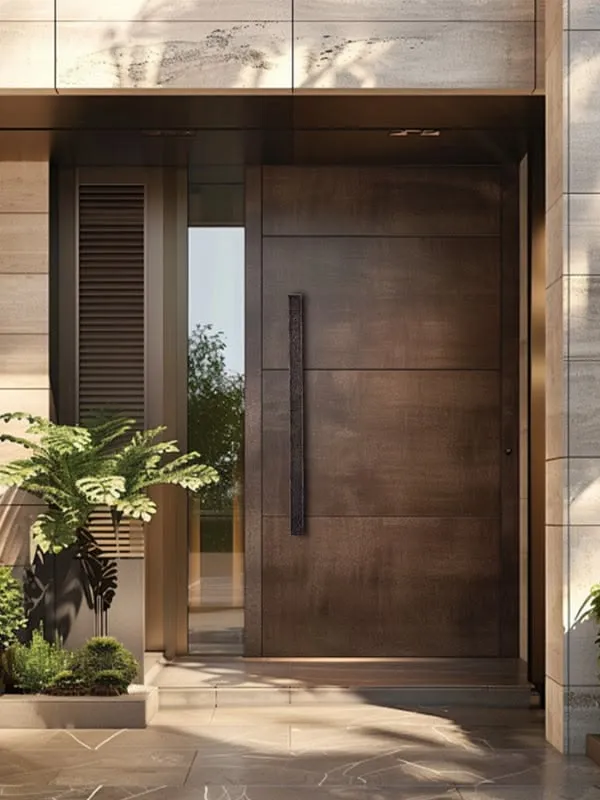
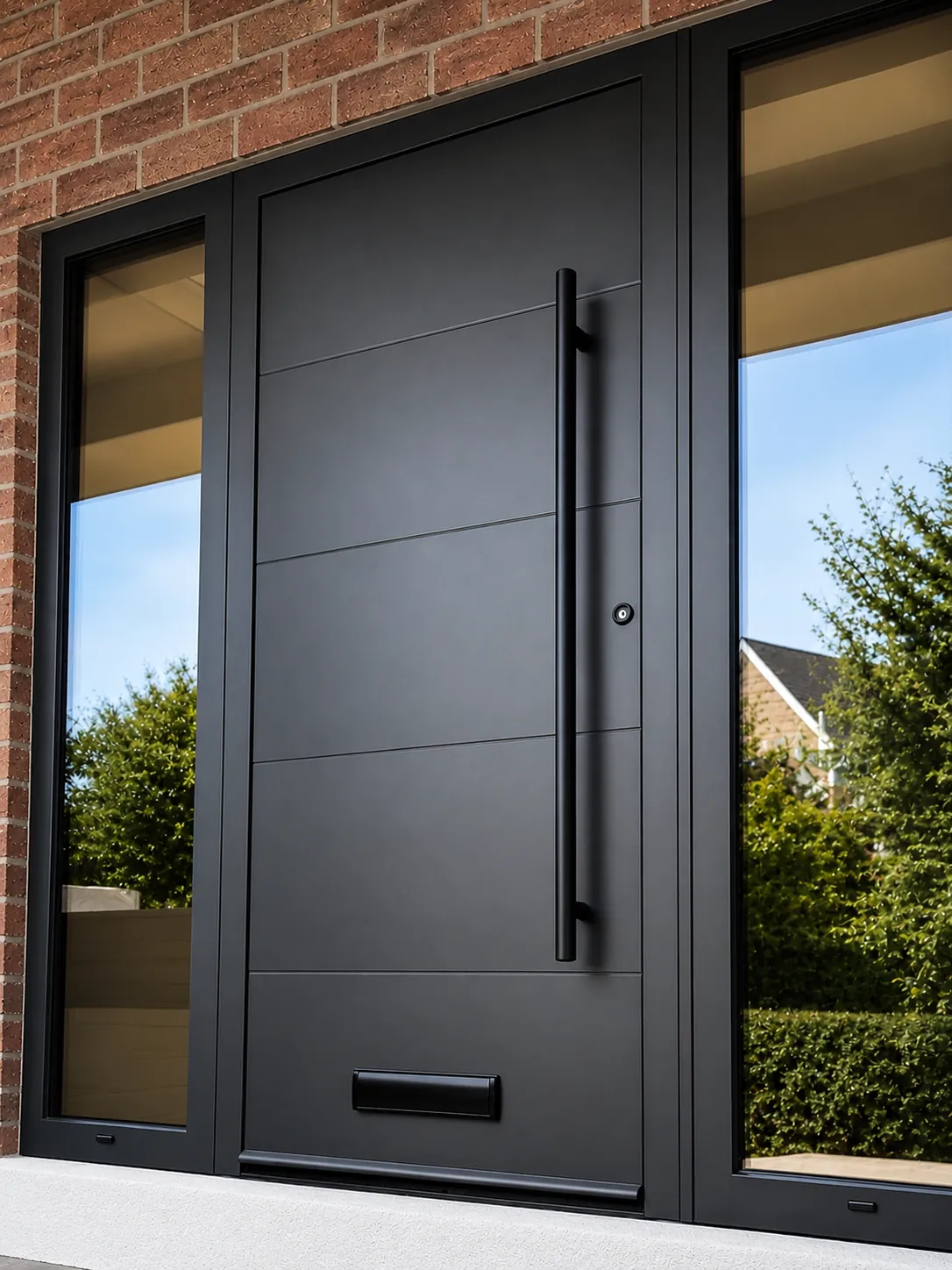
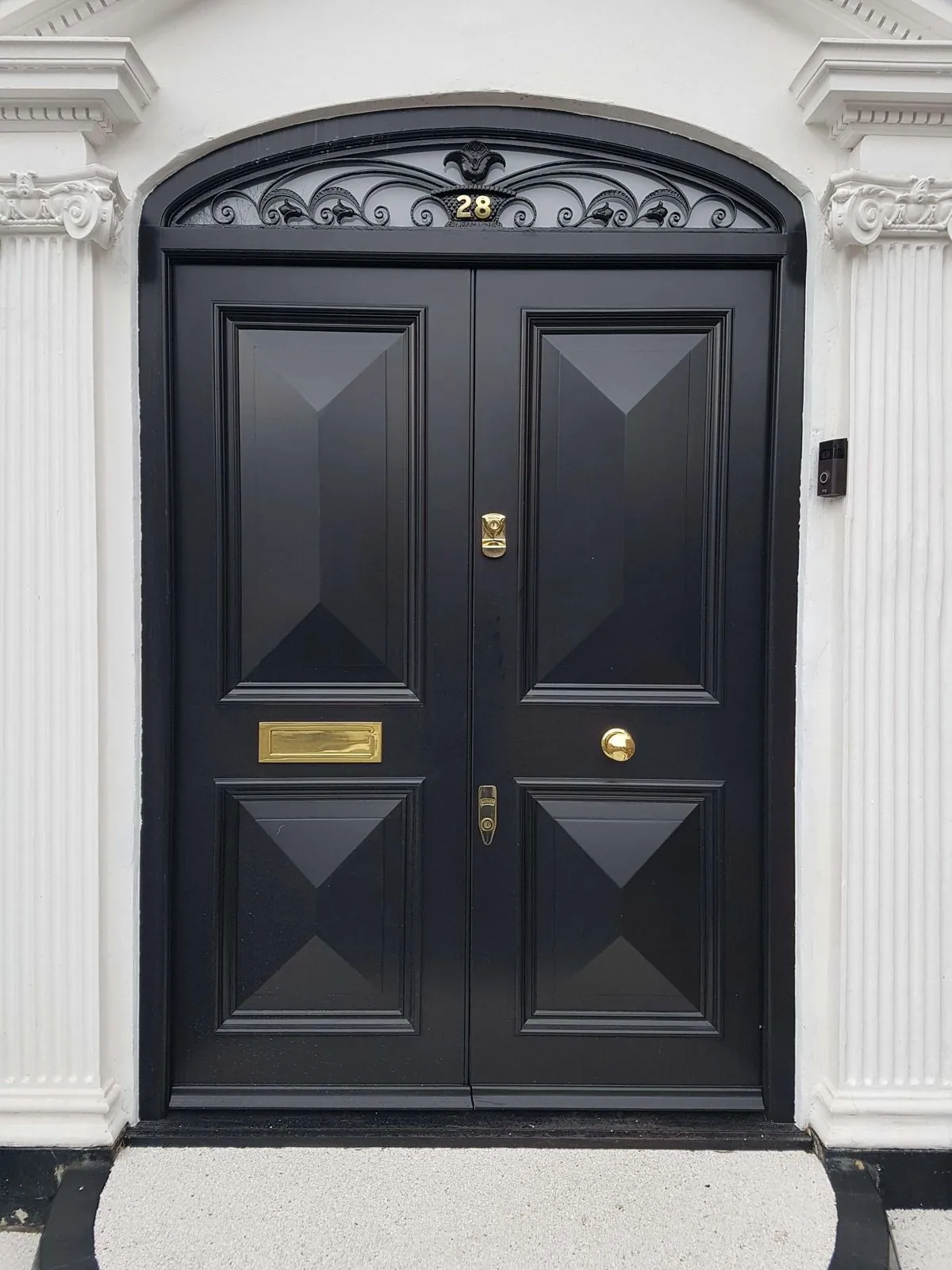
Most of the steel doors we fit go onto Victorian, Edwardian and 1930s houses, where the door has to suit the street as much as it protects the house. A milled steel leaf reproduces the panel proportions those frontages were built with, in Georgian, Victorian, Edwardian, Kensington, Regency, Cottage and other profiles, powder coated in any RAL colour. From the pavement it reads as a painted timber door.
On a new build, an extension or a refurbished modern frontage the constraint is different. There is no original profile to match, the opening is usually squared and generous, and the question becomes how much light you want in the hall. That is the point at which aluminium tends to win on its own merits rather than by default.
Consent is worth raising early. On a listed building or in a conservation area, consent can be required for a replacement front door, and we flag it at the survey if it applies to you. Your local planning authority is the final word on what it will accept, and we would not guess on its behalf.
How much of the entrance is glass?
The more glass, the stronger the case for aluminium.
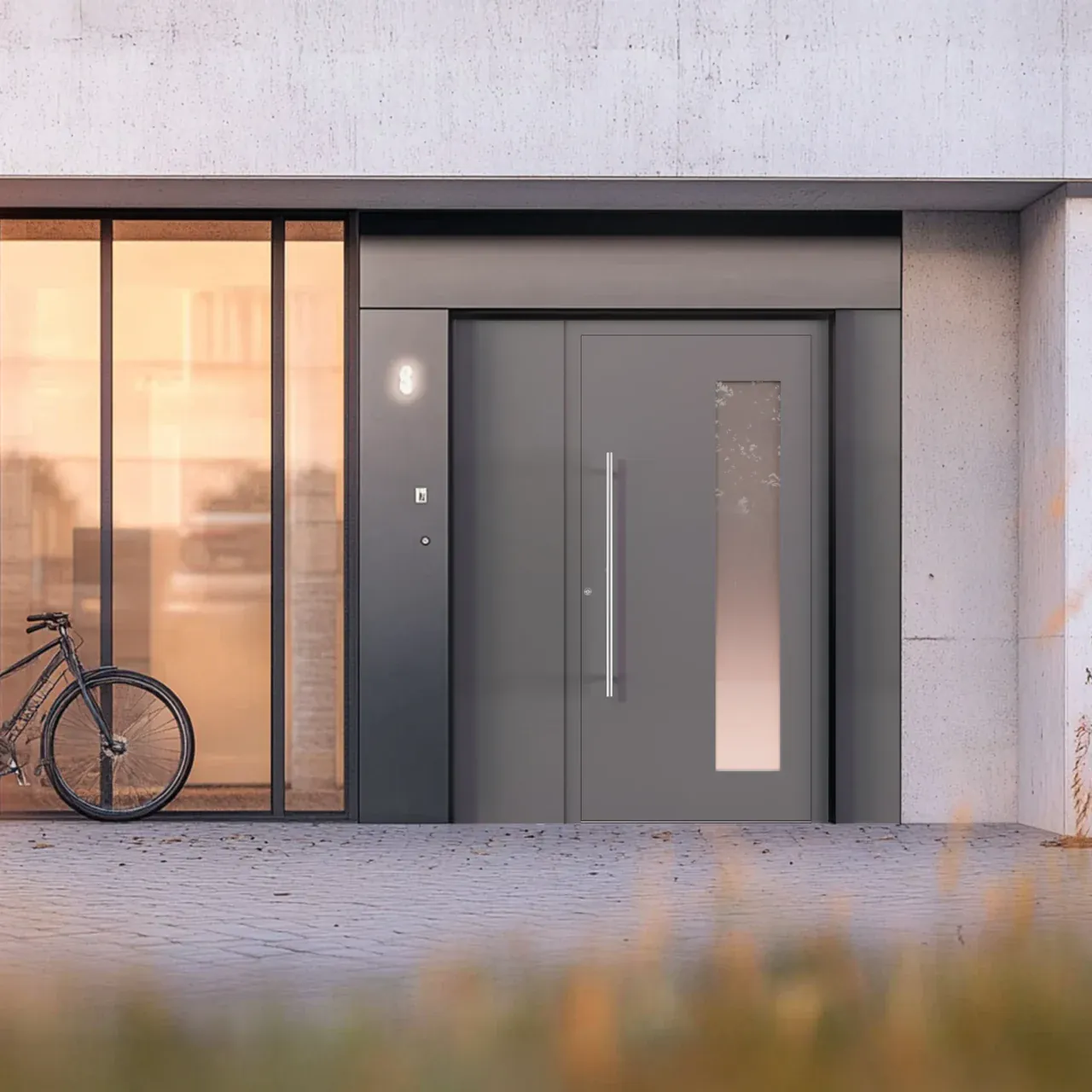
Steel takes glazed panels, vision panels and full-height sidelights, all in laminated security glass specified as part of the doorset. Aluminium carries the larger glazed areas more comfortably: the slim thermally broken profile is what makes a full-height glazed surround or a run of horizontal glazed bands possible without the frame dominating the entrance.
So the practical test is proportion rather than presence. A panelled door with a glazed fanlight above it is steel territory. A door that is mostly glass, set in a glazed surround, is aluminium territory. In both cases the glazing is tested as part of the doorset, not added to it afterwards, and the configuration is confirmed against the certificate before the door is made.
What about a wide or oversized opening?
A wide opening points to a format before it points to a material.
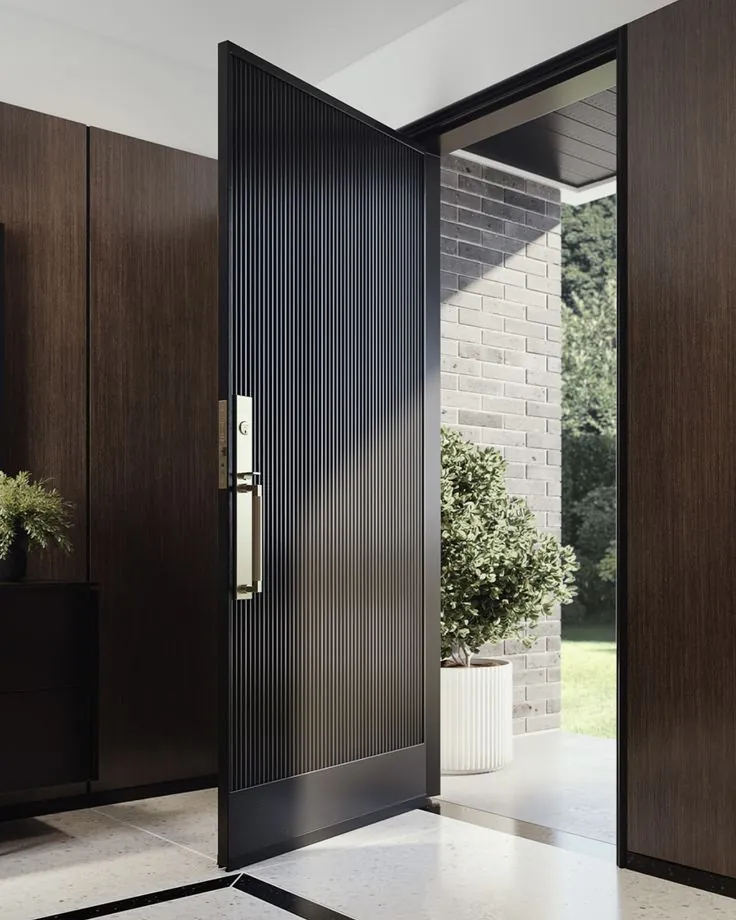
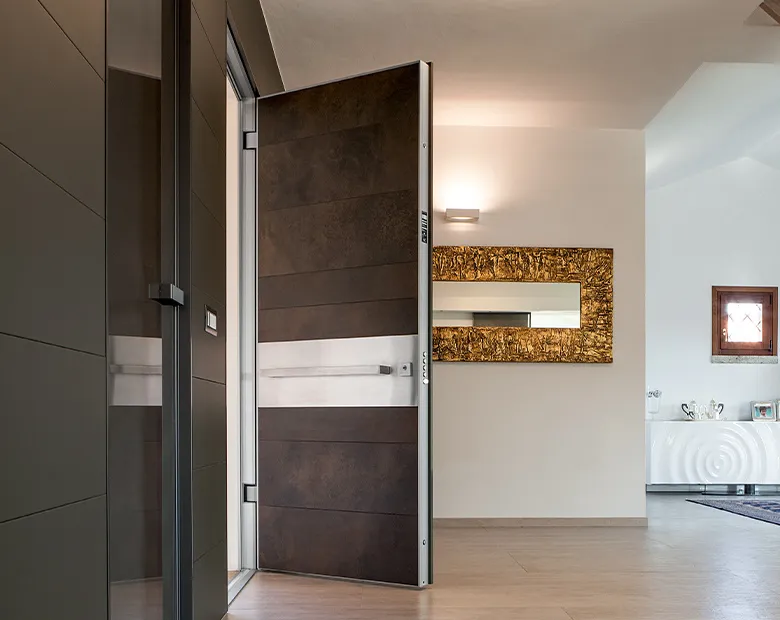
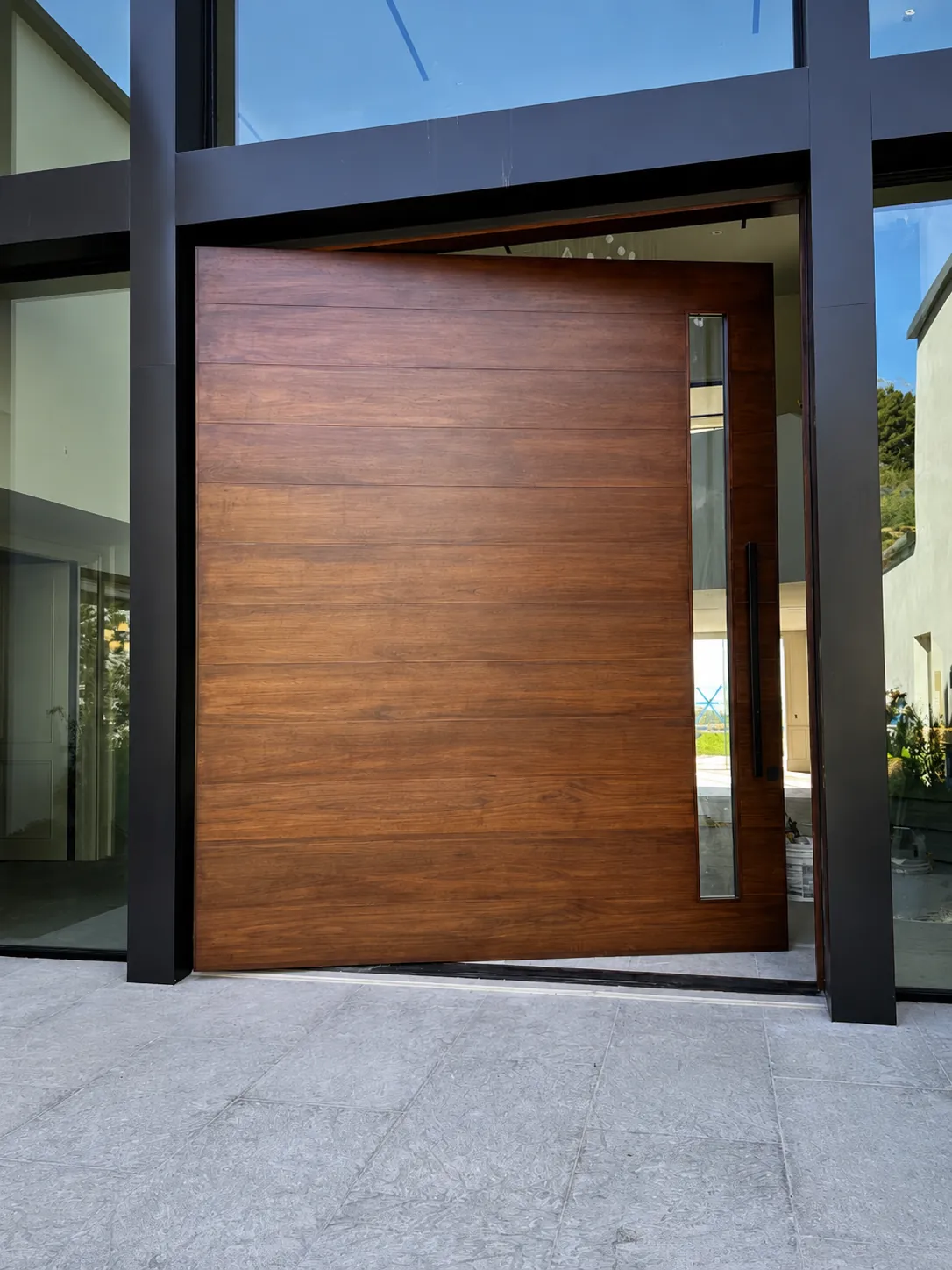
Two routes cover it. A double leaf with sidelights and a transom keeps a traditional arrangement and suits a panelled steel treatment. A pivot front door hangs on a concealed mechanism rather than side hinges, which is how a single oversized leaf is carried without the door fighting its own weight.
Security does not have to give way to scale. Steel pivots are built and tested to SR3 under LPS 1175 and aluminium pivots to RC3, with RC4 where the specification calls for it. A larger door is built on a heavier frame with more locking points, not fewer.
Exposed entrance or sheltered porch: does the weather change the answer?
Less than people expect, because both ranges are built for a British front elevation.
Steel is galvanised and then powder coated, which seals it against moisture, and the range uses a stainless steel threshold with double rubber seals. Aluminium does not rust, rot, swell or warp, the thermally broken frame stays dimensionally stable through heat, cold and damp, and it carries a double perimeter seal behind the thermal break.
What exposure does change is the specification rather than the material: threshold detail, sealing and the way the frame meets the reveal all get more attention on a door that takes weather head on than on one tucked under a deep porch. That is a survey conversation on either range.
Where does your security priority actually sit?
This is the one place where the two ranges have a genuinely different ceiling.
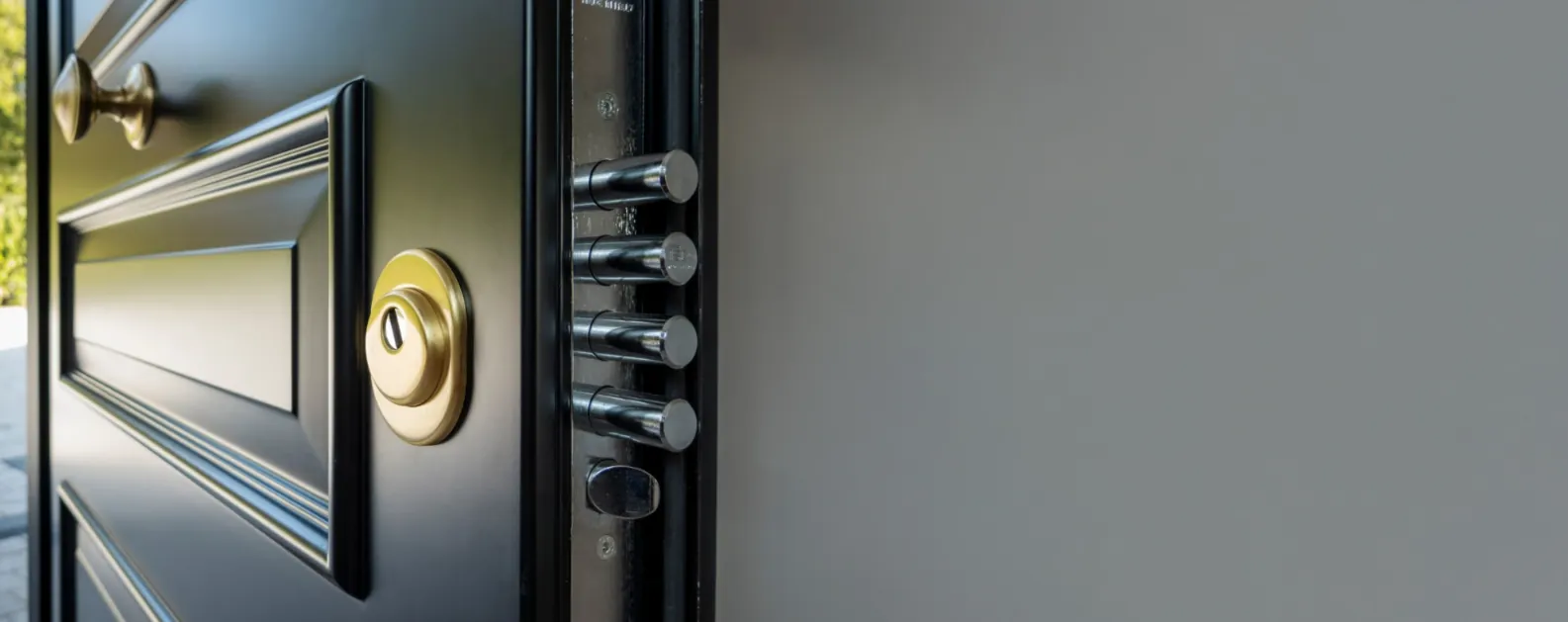
Steel is built and tested to SR3 under LPS 1175, with SR4 where the risk warrants it, and bullet-resistant and blast-resistant configurations are available above that. Aluminium is PAS 24 tested construction, with RC3 configurations available and RC4 on request under BS EN 1627. Secured by Design configurations are available on request across the range, and what each standard means in plain terms is set out on our certifications page.
The practical reading. If an insurer, a previous incident or the property itself has set a bar above RC4, or if a bullet-resistant or blast-resistant build is in scope, steel is the answer and the design follows it. If the bar is an independently tested class and the design is leading the brief, aluminium meets it and gives you the entrance you wanted. For most homes both ranges clear the bar comfortably, and the right class for your property is confirmed at the free survey rather than assumed from a page.
If you are weighing either of these against a composite door, that is a different comparison and we have written it up separately in composite doors vs steel doors.
What should not decide it?
Three things that look like tie-breakers and are not.
Thermal performance. Both ranges reach a U-value of 0.8 W/m²K, steel with an insulated core and double perimeter sealing, aluminium with a thermally broken frame and an insulated core. The figure for your door is confirmed in writing at the survey. Choosing on warmth alone will not separate them.
Upkeep. Both are low maintenance. Powder-coated galvanised steel and powder-coated aluminium hold their colour outdoors without repainting, and both want an occasional wipe and a periodic lubrication of the locks and hinges. Neither rots, swells or warps.
Colour. Any RAL colour on either, inside and out, and a different shade facing the street if you want one. Black and anthracite grey are the finishes we fit most on both ranges.
So which one suits your home?
| Your situation | Usually | Because |
|---|---|---|
| Victorian, Edwardian or 1930s frontage that needs a panelled face | Steel | Milling is cut into a steel leaf; twelve standard profiles |
| New build or modern extension, squared opening | Either | No original profile to match, so the glazing decides it |
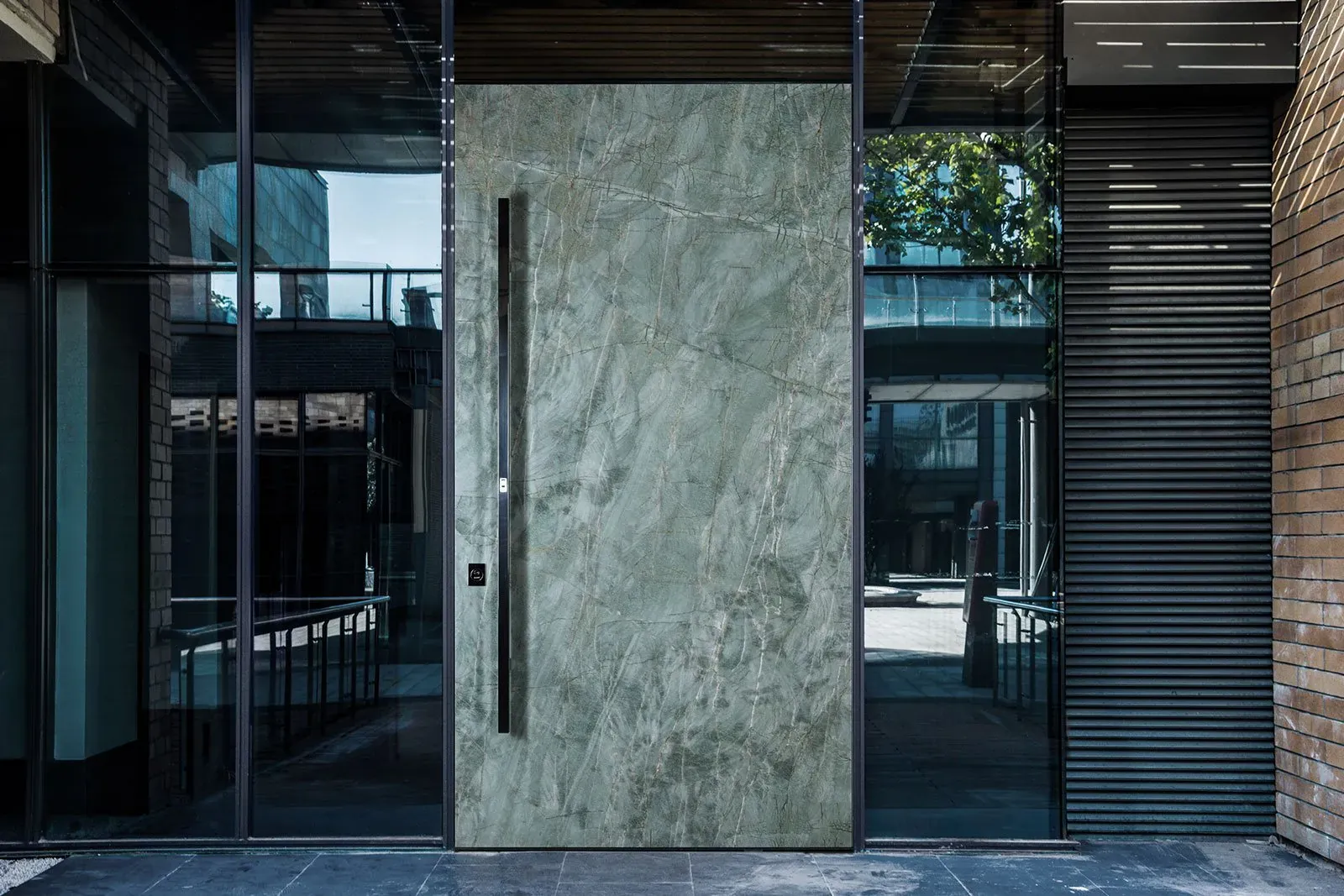
| Entrance that is mostly glass, or a full-height glazed surround | Aluminium | The slim thermally broken frame carries the larger glazed areas |
| Single oversized leaf | Pivot, in either material | The concealed mechanism carries the weight a side hinge would not |
| Double-width opening with sidelights and a transom | Steel | Suits a panelled, traditional arrangement |
| Insurer or incident has set a bar above RC4, or bullet and blast resistance is in scope | Steel | SR4 under LPS 1175, with those configurations available above it |
| Exposed elevation taking weather head on | Either | Both are built for it; the threshold and sealing detail is the real answer |
The next step
If two or three rows of that table point in different directions, that is normal, and it is what a survey is for. We measure the opening, look at the frontage, talk through the glazing and the level of security that suits the property, and tell you which of the two we would put on your house and why.
Book a free site survey, and you will have a written quote with the price fixed before anything is made.
Frequently asked questions
- Can an aluminium door be milled to a panelled period profile?
- No. Milling is cut into the face of a steel leaf, and the twelve standard profiles belong to the steel range. An aluminium door achieves its character through flush faces, ribbed and slatted textures, inlaid bands, glazing and hardware instead. If the house needs a panelled face, steel is the route.
- Which material suits a house in a conservation area?
- Consent can be required on a listed building or in a conservation area, and we flag it at the survey if it applies to you. Your local planning authority is the final word on what it will accept. In practical terms a milled steel leaf can reproduce a Georgian, Victorian or Edwardian panel profile, which is usually what a like-for-like replacement needs to look like from the street.
- Is one of them warmer than the other?
- Not meaningfully. Both ranges reach a U-value of 0.8 W/m²K, steel with an insulated core and double perimeter sealing, aluminium with a thermally broken frame and an insulated core. The exact figure for your door is confirmed in writing at the survey, so thermal performance is rarely the thing that decides the material.
- Which is better for a wide or oversized entrance?
- A wide opening usually points to a pivot format or a double leaf rather than to one material. Steel pivots are built and tested to SR3 under LPS 1175 and aluminium pivots to RC3, with RC4 where the specification calls for it, so the security is not the trade-off. The opening itself is measured and the format confirmed at the survey.
- Does one need more looking after than the other?
- Both are low maintenance. Galvanised, powder-coated steel and powder-coated aluminium hold their colour outdoors without repainting, and both ask for an occasional wipe and a periodic lubrication of the locks and hinges. Neither rots, swells or warps.