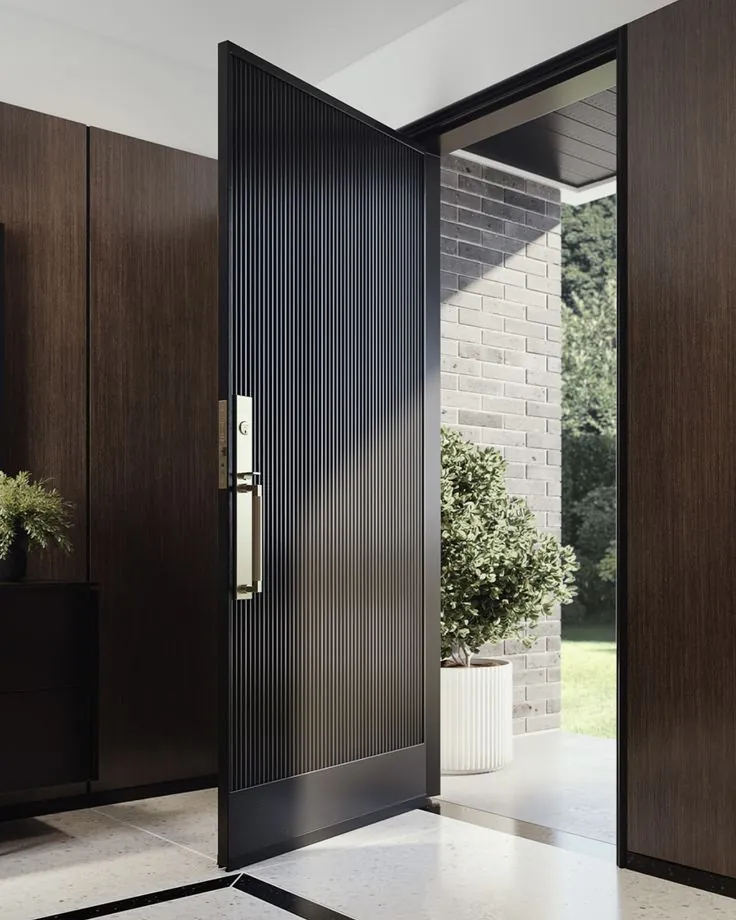
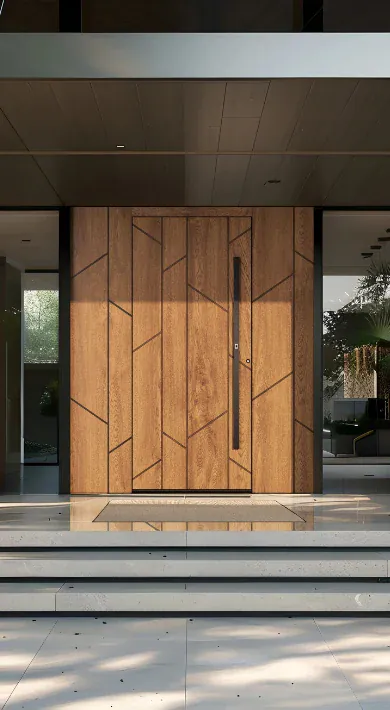

Front doors
Composite vs steel doors: security ratings compared
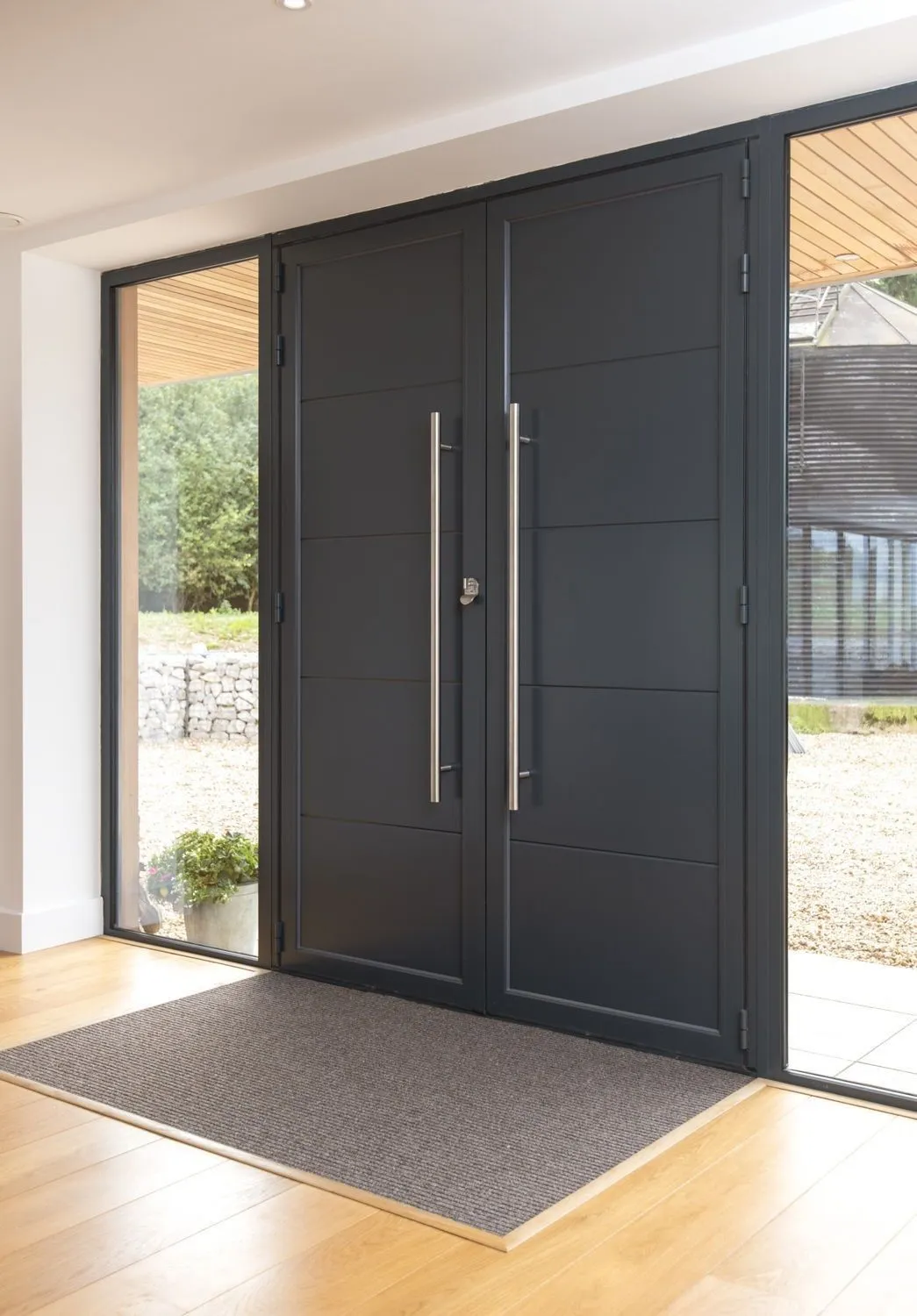
In short
Composite doors layer GRP, foam and timber into a mid-market timber replacement, relying on a steel plate at the lock zone. Steel doors are built on a galvanised frame with a certified core and reach the higher, independently tested LPS 1175 security ratings composite cannot. For certified security, longevity and made-to-measure design, steel is the upgrade; composite is a reasonable lower-cost replacement.
Key takeaways
- Composite is a GRP skin, foam core and a steel plate only at the lock zone; steel is a galvanised frame and rated core throughout the door.
- Both can meet the PAS 24 baseline, but only steel reaches the higher LPS 1175 (legacy SR) ratings some insurers require.
- A steel door with a specified insulated core (~0.8 W/m²K) can better a typical composite on thermal performance.
- Steel is made to order (milling, glazing, sidelights, hardware and any RAL colour) and outlasts composite under heavy use.
Composite and steel are both popular front-door materials, but they solve different problems. A composite door layers materials to balance cost, insulation and looks at a mid-market price point. A steel door is built around a galvanised frame with a certified security core, designed to meet independently tested security standards such as LPS 1175 and PAS 24. If you are weighing up the two options for your home, the comparison usually comes down to security performance, lifespan and how much design flexibility you actually need.
What is a composite door?
A composite door combines a timber frame with a glass-reinforced plastic (GRP) or uPVC skin, a foam insulating core and a steel reinforcing plate at the lock zone. The mix of materials is designed to give the appearance of timber with lower maintenance and better thermal performance than a solid wood door.
Composite doors are widely available, typically from off-the-shelf ranges in a limited set of sizes and styles. They can achieve PAS 24 security certification in standard configurations and are a reasonable choice for a homeowner on a tighter budget who wants a step up from a basic timber or uPVC door.
The trade-off is what the materials cannot do: the GRP skin, foam core and timber substrate are not in the same class as a steel leaf and galvanised frame when the question is resistance to a determined, tooled attack.
What is a steel front door?
A steel front door is built around a galvanised steel leaf set into a steel frame, with an insulated core behind the skin. Of the metal front doors on the market, this is the fully reinforced end: the whole door is the security element, not a panel with a plate behind the lock. The result is a door that holds its structural integrity under sustained physical attack in a way composite construction cannot match.
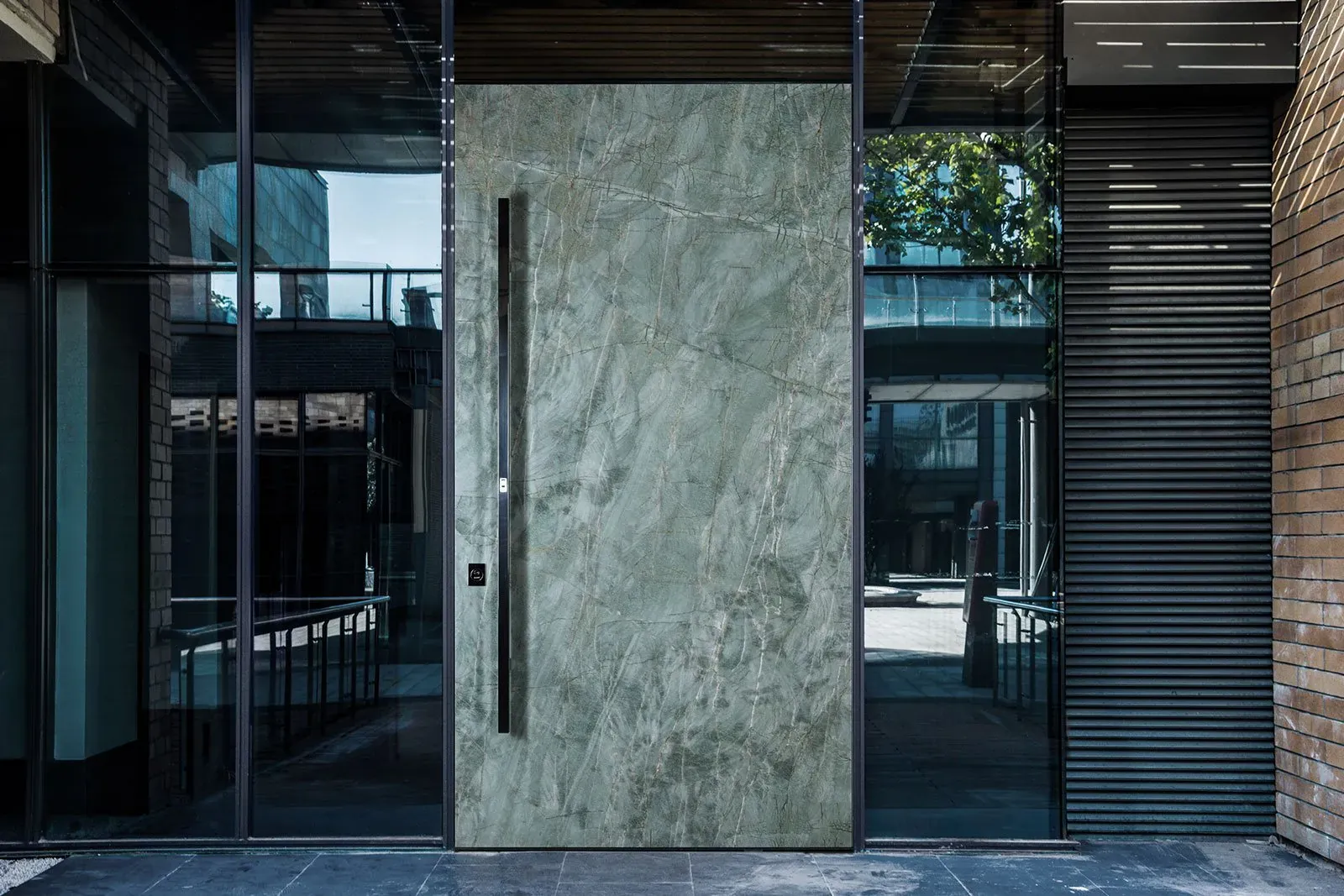
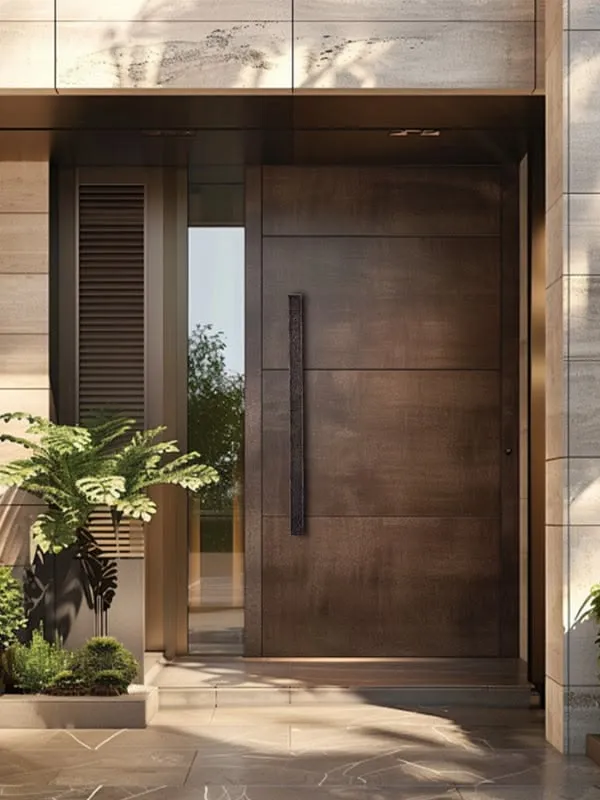
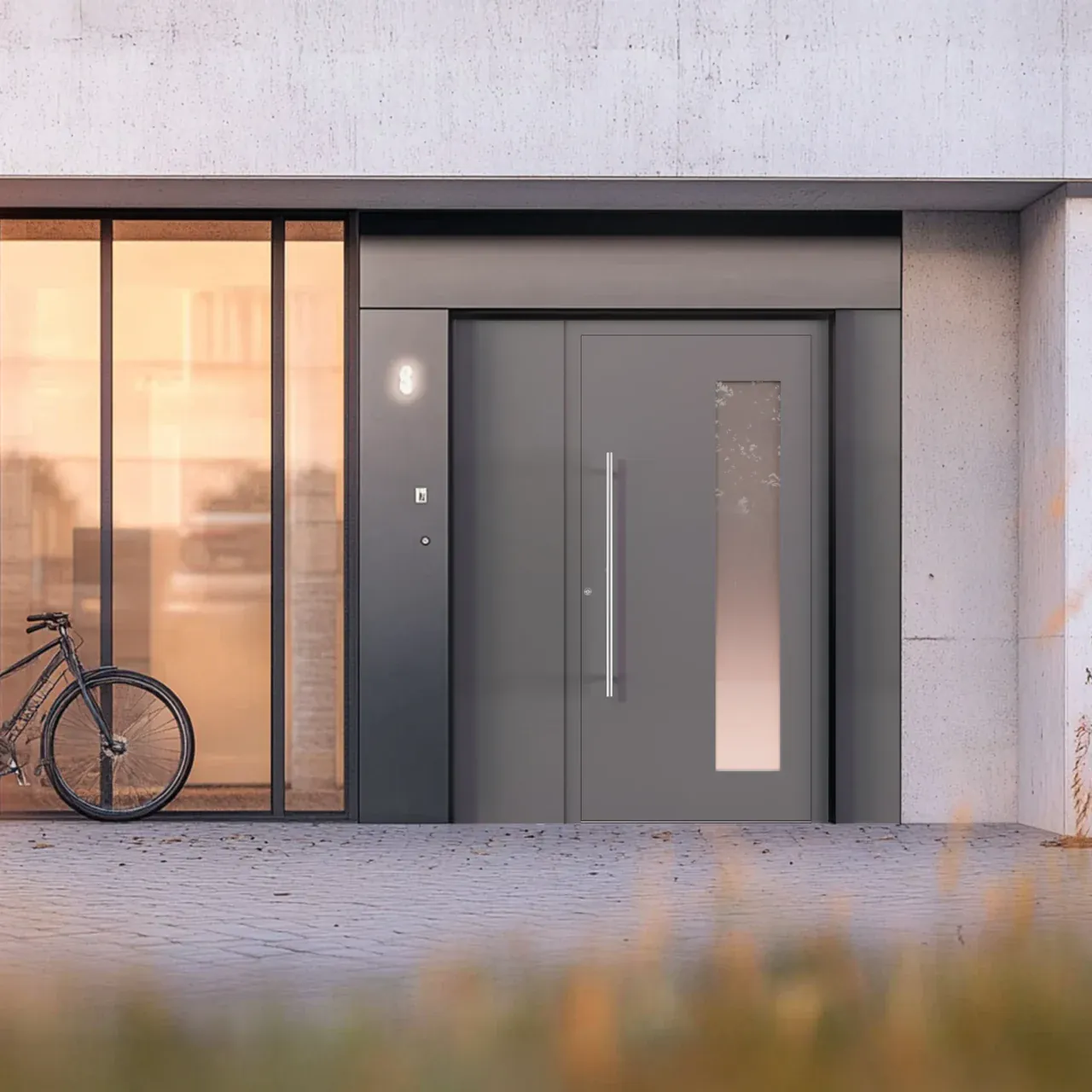
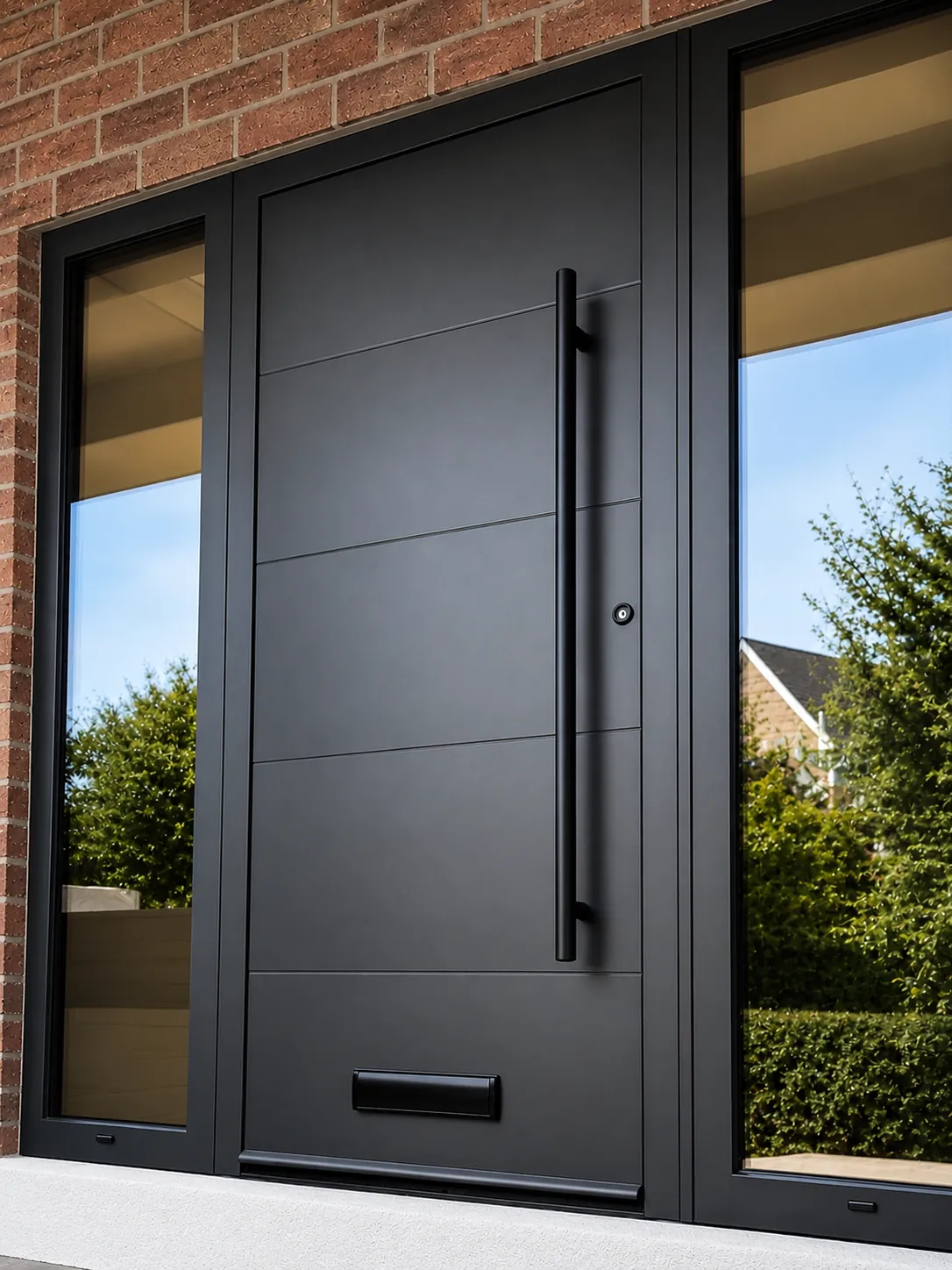
Unlike composite, steel doors are made to order: size, shape, milling profile, glazing, sidelights, transom and hardware are all set to the individual opening. They are available across the full RAL colour range, including black and anthracite finishes, and can be milled to replicate Georgian, Victorian, Edwardian or contemporary profiles. From the street it reads as a timber panel door. Only the spec sheet tells you it is steel.
Our steel front doors are also available in security-rated variants tested to LPS 1175, the independent intruder-resistance standard, at levels composite construction does not reach. They sit alongside aluminium and pivot formats in our range of front doors for London homes.
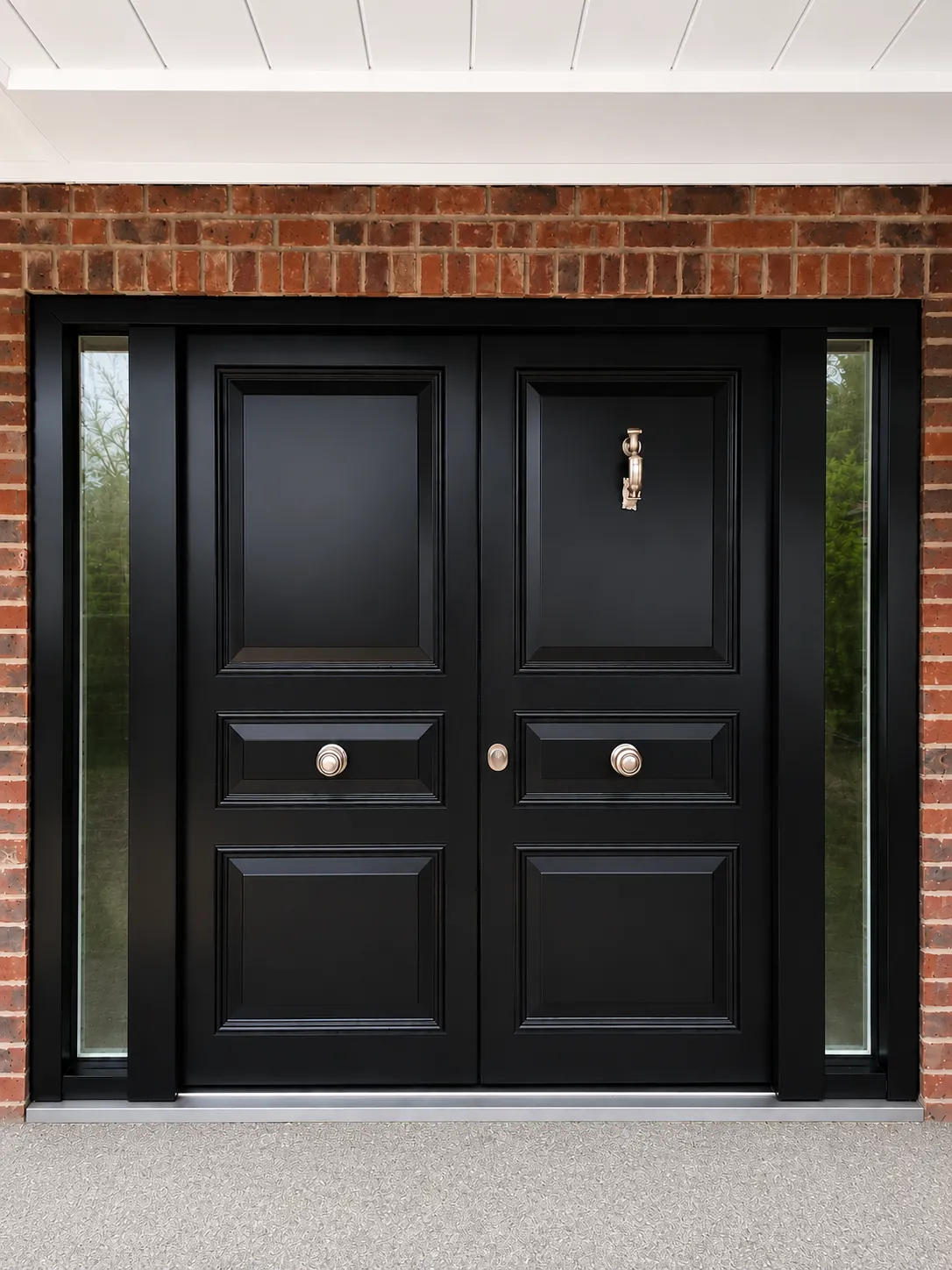
Which is more secure: composite or steel?
Steel is more secure by a measurable margin at the higher performance levels, and the margin is independently verified.
It is worth knowing where the risk actually sits. In burglaries where someone got in, they came through a door around three-quarters of the time, and in nearly a quarter of cases the door was not even locked. So both the door you fit and how it resists a determined attempt matter.
LPS 1175, published by the Loss Prevention Certification Board (part of BRE), is the independent standard for intruder resistance. Its current scheme rates a door by the tools used against it and how long it holds, written as a letter and a time, for example a C5 rating. The older SR1 to SR8 ratings are the legacy equivalent, still seen on existing certificates. PAS 24, a British Standard specification, sets a baseline security performance requirement widely demanded by insurers and police initiatives such as Secured by Design.
Composite doors can be built to PAS 24 in their standard form, but they are not built to the higher LPS 1175 ratings that steel achieves. Their resistance relies on the steel reinforcing plate at the lock zone rather than the door leaf itself, so a determined attacker with tools can defeat the GRP and foam core without engaging that plate.
Steel security front doors, built on a full galvanised frame and rated core, can be independently tested to the higher LPS 1175 ratings. The resistance is in every part of the construction, not just the locking zone. This is why secure metal doors hold their rating where a composite relies on a single reinforced point. For homeowners in higher-risk areas, or anyone shopping for high security front doors rather than a straightforward replacement, steel is the natural choice, particularly where an insurer requires Secured by Design certification.

What about thermal performance and energy efficiency?
A well-specified composite door typically achieves a U-value of around 1.0 to 1.4 W/m²K, depending on the core and glazing. It is a reasonable thermal performer for the price.
A steel door built with a specified insulated core and double perimeter sealing can achieve a U-value of around 0.8 W/m²K, which betters a typical composite. This is an insulated-core specification, not the figure for a standard steel door: the performance comes from the core, a high-density insulated fill behind the steel skin, with seals that close against both the frame and the threshold, limiting heat transfer in a way a basic composite foam core does not.
If thermal performance is a primary consideration alongside security, a steel door with a specified insulated core matches or betters a typical composite while reaching a higher security rating. The thermal result depends on specifying that core, not on the material alone.
Which lasts longer?
Steel has a longer effective service life under heavy use and exposed conditions.
The GRP skin on a composite door can fade, crack or delaminate over fifteen to twenty years, particularly on south- or west-facing frontages exposed to direct sun. The foam core can compress at hinge and lock points under prolonged use, affecting fit. Repainting is possible but difficult because GRP takes paint differently to timber.
A galvanised steel door, powder-coated in a full RAL colour, does not rot, warp or delaminate. The galvanised layer prevents corrosion under the coating; if the coating is damaged, it can be repainted in the same RAL without starting from scratch. With proper maintenance, a steel door outlasts the surrounding brickwork.
Which is better for the look of my home?
Composite doors have improved significantly in appearance and are available in a range of moulded profiles that replicate timber panel doors reasonably well, in a set of stock colours.
Steel doors offer more design freedom. Because each door is made to order, the milling profile (Georgian, Kensington, Victorian, Edwardian, Cottage, V-groove and others), glazing size, sidelight width, hardware finish and colour are all set by you, not by what is available in a supplier’s off-the-shelf range. If you want a door that matches a period property precisely, or a clean minimal face for a modern extension, steel is the more flexible option.
The full RAL colour range is open to both materials, but the powder-coated finish on a steel door holds colour more consistently over a longer period than the painted or GRP surface on a composite.
Do composite or steel doors qualify for insurance discounts?
Insurance eligibility depends on the certification a door holds, not the material it is made from.
PAS 24 is the baseline security specification many home insurers and police-backed schemes recognise. Composite doors can achieve PAS 24. Steel doors built to the higher LPS 1175 ratings go beyond it.
Secured by Design (SbD) is the official police security initiative. It certifies doors that meet PAS 24 or an equivalent recognised standard, such as STS 201. Doors carrying the SbD mark are recognised by most leading home insurers, and some policies specifically require an SbD-certified door at external openings for certain cover levels. Steel is the usual material for SbD-certified doors at the higher security levels.
If your insurer asks for a door that meets a named security standard, ask for the door’s certification by name, not just a general assurance that it is “secure”. A door with a numbered certificate against PAS 24, LPS 1175 (some insurer schedules still word this as “SR2 or above”), or Secured by Design is the document that answers an insurer’s question.
If you are weighing up composite and steel for your home, we are happy to talk you through the options for your opening, your area and your risk. Every enquiry starts with a free site survey. You can also see the steel range or the aluminium range for more detail on construction and finishes.
Frequently asked questions
- What is the difference between a composite door and a steel door?
- A composite door layers glass-reinforced plastic, foam and timber into a mid-market timber replacement, and relies on a steel reinforcing plate at the lock zone. A steel door is galvanised steel throughout the leaf and frame with a certified core, and can be independently tested to LPS 1175 at levels composite construction does not reach.
- Is a composite door as secure as a steel door?
- A composite door can achieve PAS 24 certification in its standard form, but it cannot match a steel door built to the higher LPS 1175 ratings, because its resistance depends on the steel-reinforced lock zone rather than the door leaf itself.
- Do steel front doors meet Secured by Design standards?
- Yes. Steel front doors built to the appropriate standard can hold Secured by Design certification, the specification most home insurers and police schemes recognise, and steel is typically the material used for SbD-certified doorsets at the higher security levels.
- Can I get a steel front door that does not look like a steel door?
- Yes. A made-to-order steel door can be milled, glazed and finished to look like a period timber door or a contemporary minimal entrance: most visitors never realise it is steel. A black steel door is the finish we fit most, suiting both period and modern frontages.
- How much more expensive is a steel front door than a composite?
- A made-to-measure steel security door costs more than a standard composite, reflecting the certified, made-to-order construction and the specialist survey and installation. Both are priced individually, so the only reliable figure is a written quote after a free survey.