Front doors
What makes a door Secured by Design?
In short
Secured by Design is the UK police certification scheme, not a test standard of its own. A door qualifies when the complete doorset, the leaf, frame, hinges, locking and glazing, has been tested to a recognised standard such as PAS 24 by an accredited certification body, and the scheme has accepted that evidence. The accreditation attaches to the specific tested product and configuration, never to the company selling it.
Key takeaways
- Secured by Design is a certification scheme run by the police service's own crime prevention body, sitting on top of standards such as PAS 24 and LPS 1175 rather than replacing them.
- A door qualifies only when the complete doorset is tested by an accredited third party to a named standard and the scheme accepts that evidence, product by product.
- Accreditation covers a specific product in a certified size range and configuration, so ask for the certificate that names the door, size and glazing you are actually ordering.
- No certificate covers the fitting, so ask who surveys the opening and who installs the door before you commit.
A door is Secured by Design when the complete doorset has been independently tested to a recognised security standard, usually PAS 24, by an accredited certification body, and Police Crime Prevention Initiatives has accepted that evidence and granted the product its Police Preferred Specification. The accreditation belongs to the tested product, not to the company that sells it.
That sentence hides most of what buyers get wrong about the scheme. Secured by Design is not a test, and it is not a rating scale. It is a certification scheme that sits on top of standards other bodies write and other laboratories run. Knowing the difference is what lets you check a claim rather than take it. The standards themselves, and the level our doors are built and tested to, are set out on our Secured by Design, PAS 24 and LPS 1175 certifications page. This guide explains the scheme behind them.
Who runs Secured by Design?
Secured by Design is run by Police Crime Prevention Initiatives, a police-owned organisation working on behalf of the UK police service. It is not a trade association and not a manufacturer’s own mark, which is why insurers, architects and local authorities treat it as evidence rather than as advertising.
The scheme has two sides and they get confused constantly. One is product accreditation: doors, windows, locks and other security products that meet the requirements carry the Police Preferred Specification. The other is a development award, where a housebuilder designs a scheme to the Secured by Design guidance and has the finished development recognised. A homeowner replacing a front door is dealing with the first of those, not the second.
What does a door have to do to qualify?
Four things, and all four have to hold at once.
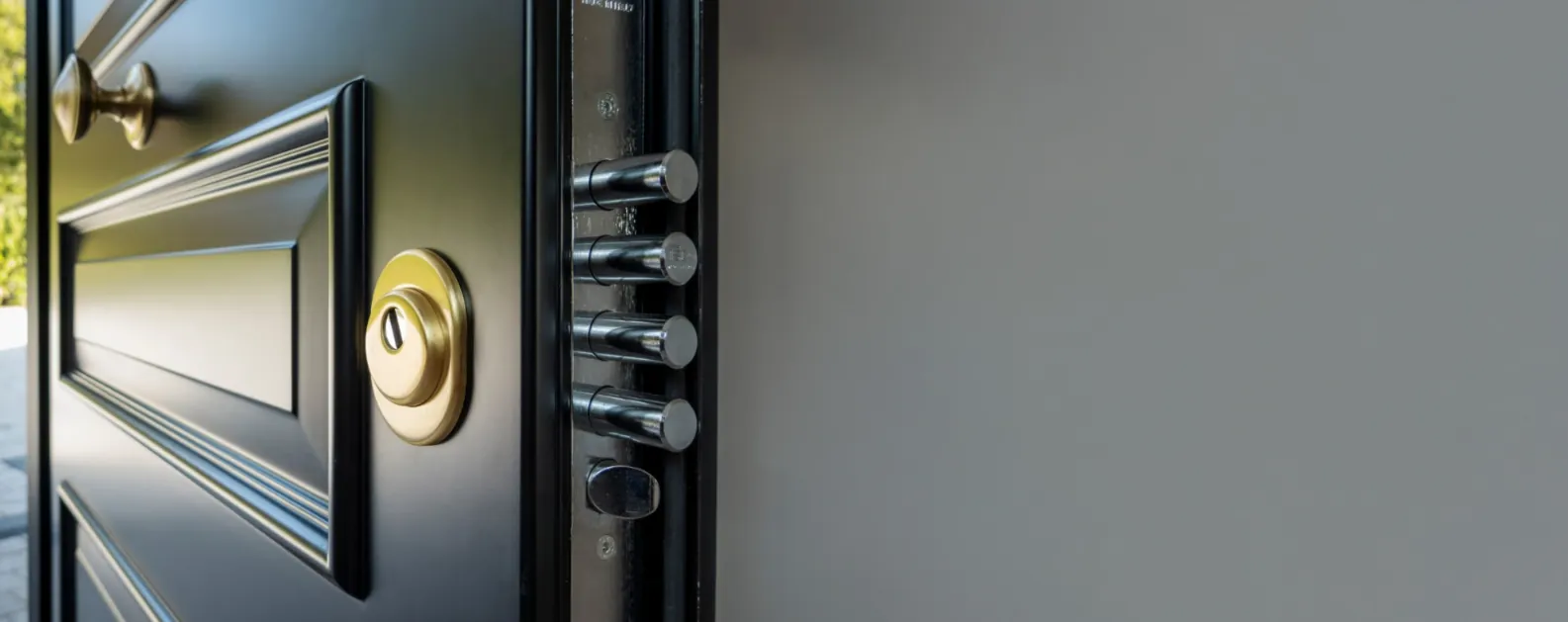
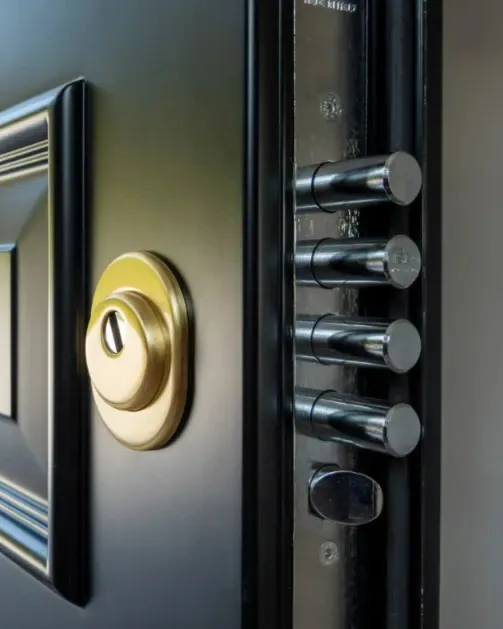
- It is tested as a complete doorset. The leaf, frame, hinges, locking points, cylinder, seals and any glazing are attacked and loaded together as one assembly. A strong leaf hung in a weak frame fails at the frame, so a panel on its own is never what gets certified.
- It is tested to a named standard. For a residential front door that is normally PAS 24, the British standard for enhanced security performance of a doorset. Where the assessed risk is higher, a graded forced-entry standard such as LPS 1175 is used instead of it or alongside it.
- The testing is done by an accredited third party. An accredited certification body carries out or oversees the work. Self-certification does not qualify, and that is the entire point of the scheme.
- The scheme accepts the evidence, product by product. Accreditation attaches to a specific product in a certified configuration and size range. A company can hold it on one door and not on another, and a product whose specification changes has to be resubmitted.
The fourth point is the one worth carrying into a showroom. “We are Secured by Design” is a claim about a company. “This door, at this size, in this configuration, is certified” is a claim about the thing you are buying.
How does Secured by Design relate to PAS 24 and LPS 1175?
It sits above them rather than competing with them.
PAS 24 is the threshold. It sets a pass or fail bar for an enhanced-security doorset and is the standard most residential Secured by Design doors are certified against. It is also what the building regulations for new homes in England point to, so it is usually what an architect or a building control officer means when they ask about security certification.
LPS 1175 is the graded scale. Published by the Loss Prevention Certification Board, it grades a doorset by the tools used against it and how long it holds out, written as SR followed by a number. The full scale is explained in our guide to LPS 1175 security ratings. Our steel front doors are built and tested to SR3, with SR4 available where the risk warrants it.
Secured by Design is the scheme that says: this product met one of those standards, under accredited test conditions, and we have seen the evidence. So a door can hold an SR rating and carry Secured by Design. It can also hold an SR rating and sit outside the scheme entirely, because joining is an application a manufacturer chooses to make.
Does a Secured by Design door count as insurance approved?
Not automatically, because no official category of that name exists. Insurers do not publish an approved-door list. They reference recognised standards and treat certified doors as lower risk, and Secured by Design is the one they name most often, which is how the phrase came to be used so loosely. The reliable move is to ask your insurer in writing which named standard they require, then match the door to that answer. We go through that in do insurance companies approve specific front doors?
How do you check a Secured by Design claim?
Three checks, in this order.
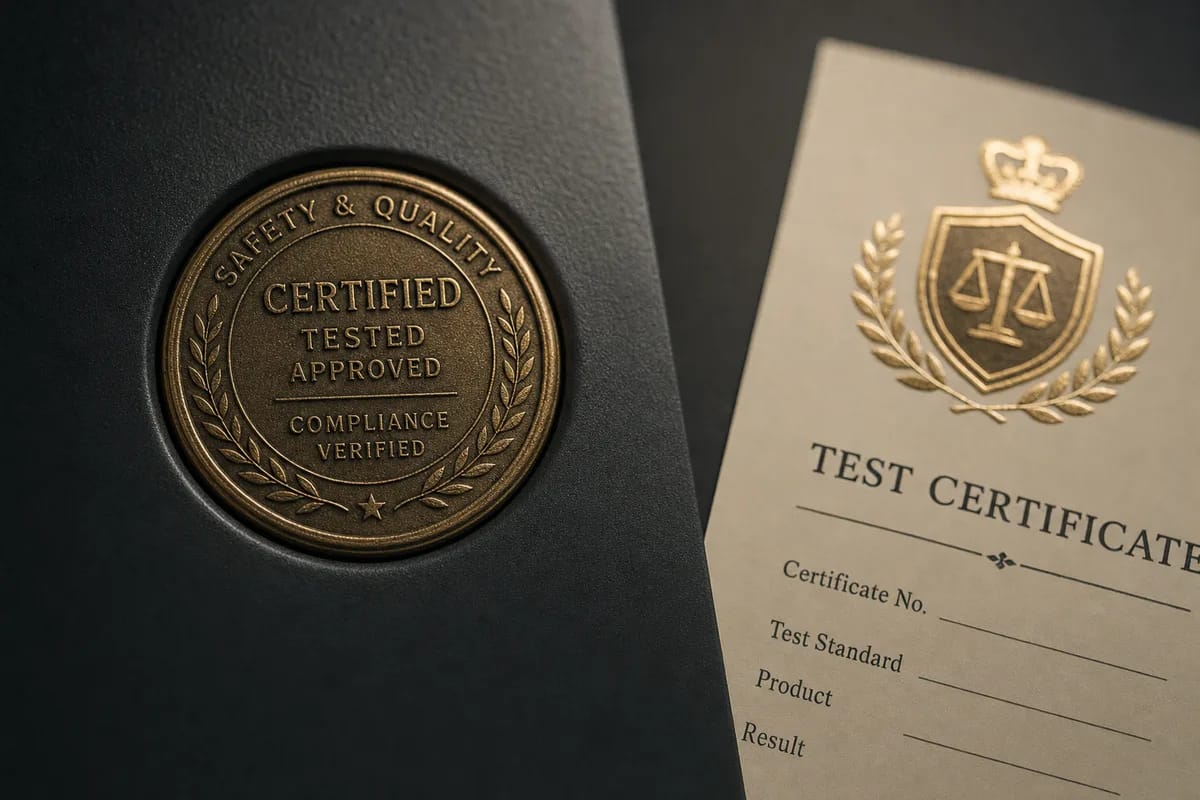
- Ask which standard the certificate names, and which body issued it. An answer that stops at “it is Secured by Design” is not an answer. A real one names PAS 24 or LPS 1175 and an accredited certification body.
- Check the scheme’s own list. Secured by Design publishes its member companies and their certified products, and a genuine product appears there. If it does not, ask why not.
- Match the certificate to your order. Certification covers a tested size envelope and configuration. Double leaves, sidelights, transoms and large glazed panels all have to sit inside it. Ask outright whether the certificate covers the door you are specifying.
There is one thing no certificate covers, and it is the fitting. A certified doorset fixed badly into a poor opening will not behave the way it did in the laboratory. Ask who surveys the opening, who installs the door, and whether that is the same team.
What to ask about the certificate before you order
Five questions, all of them about the paperwork rather than the product.
- Which standard is this door certified to, at what level, and by which accredited body?
- Does the product appear on the scheme’s own published list, and under which company name?
- Who holds the certificate? On a sourced doorset it belongs to the manufacturer who built and tested it, and a supplier should be able to show you the document rather than describe it.
- Does the certificate cover my exact size, configuration and glazing, or a tested envelope my order sits inside?
- If I change the specification, does the certification still hold, or does the product have to go back for resubmission?
A supplier who answers all five plainly is showing you the evidence. One who reaches for an adjective instead is not. Forty years in the security trade has taught us that buyers decide better when the proof is in front of them.
Ready to specify a certified door?
Secured by Design configurations are available on request across our range, and the standards each door is built and tested to are set out on our certifications page. If you are not sure which standard your property or your insurer actually needs, a free site survey is the practical next step. We measure the opening, look at the risk, and confirm the specification in writing before any work begins.
Frequently asked questions
- What makes a door Secured by Design?
- The complete doorset has to be tested to a recognised security standard, usually PAS 24, by an accredited certification body, and Police Crime Prevention Initiatives has to accept that evidence and grant the product its Police Preferred Specification. The accreditation belongs to the tested product, not to the company that sells it.
- Is Secured by Design a legal requirement?
- No. It is a voluntary police scheme. The building regulations for new homes in England set a separate security requirement and point to PAS 24 as the way to meet it. Secured by Design is a certification some developers, specifiers and insurers ask for on top of that, not a legal minimum.
- Can a door be Secured by Design without being PAS 24?
- For a residential front door the scheme's requirements are normally built on PAS 24. Where the assessed risk is higher, a graded forced-entry standard such as LPS 1175 is used instead or alongside it. Ask which standard the certificate actually names rather than assuming.
- How do I check whether a door is really Secured by Design?
- Ask which standard the certificate names and which accredited body issued it, check the scheme's published list of member companies and certified products, then confirm the certificate covers the size, configuration and glazing you are ordering.
- Does Secured by Design cover the installation as well as the door?
- No. The accreditation covers the tested product. A certified doorset fixed badly into a poor opening will not behave the way it did under test, so ask who surveys the opening, who fits the door, and whether they are the same team.
- Are Security Doors 'R' Us doors Secured by Design?
- Secured by Design configurations are available on request across our range, and the standards each door is built and tested to are set out on our certifications page. We confirm the specification in writing at the quote stage, after a free site survey.