Front doors
Do insurance companies approve specific front doors?
In short
Insurers do not publish an approved-door list. They recognise independent standards (Secured by Design, PAS 24 and LPS 1175) and treat certified doors as lower risk. To make "insurance approved" verifiable, ask which named standard a door is certified to and by which body, check it on the public register, and confirm the standard your own policy requires before you buy.
Key takeaways
- There is no central "insurance approved door" list: insurers reference Secured by Design, PAS 24 and LPS 1175.
- PAS 24 is the baseline enhanced-security test; LPS 1175 grades forced-entry resistance from SR2 (opportunist) to SR3 (determined) and higher.
- Certification is third-party tested and listed on public registers, so always ask for the named standard and the certifying body.
- Ask your insurer in writing which standard they require before you buy; a certified door gives you the evidence base.
The short answer is: not directly. Insurers do not publish an approved-door list. What they do is reference recognised security standards (Secured by Design, PAS 24, LPS 1175) and grant reduced premiums or lower excesses when those standards are met. Understanding which standard applies to which door, and what each requires, is the practical knowledge that turns “insurance approved” from a marketing phrase into a verifiable claim.
This guide explains the three main standards, what they require, and how to check whether a door qualifies before you buy.
Is there an official “insurance approved door” list?
There is no single, central list of insurance-approved doors. The phrase is widely used in advertising, but no governing body publishes a registry of approved products.
What does exist is a set of independently tested and audited standards that insurers recognise when setting premiums and policy terms. The three standards most commonly referenced in home insurance policies in the UK are:
- Secured by Design (SbD): the official police security initiative, owned and run by Police Crime Prevention Initiatives
- PAS 24: a British Standard for enhanced security performance of door assemblies
- LPS 1175: a Loss Prevention Standard issued by the Loss Prevention Certification Board
When your insurer asks whether your door meets a recognised security standard, these are the three they mean. A door described as “insurance approved” by a supplier should be able to name one of these standards as the evidence behind that claim. If it cannot, ask why not.
What is Secured by Design, and why do insurers recognise it?
Secured by Design is a police initiative that sets criteria for products (including doors, locks and windows) that demonstrably reduce the risk of burglary. Products carrying the Secured by Design mark have been independently tested and certified by an accredited body to meet those criteria.
Insurers recognise Secured by Design because it ties a door’s credentials to a national police programme rather than a manufacturer’s own marketing. Some insurers specify it by name in policy wording; others accept it as evidence of a higher security standard when assessing risk.
A Secured by Design door is one that has been third-party tested to resist the entry methods most commonly used in residential burglaries. The programme is administered by Police Crime Prevention Initiatives and the list of licensed products is publicly searchable. If a supplier claims Secured by Design certification, the product should appear on that register. For more on the standards our doors are tested to, see our certifications page.
What are PAS 24 and LPS 1175?
PAS 24 (Publicly Available Specification 24) is a British Standard that sets an enhanced security threshold for door and window assemblies. It specifies tests for manual attack, structural loading, weather resistance and hardware performance. A door tested to PAS 24 has been put through a defined set of physical attacks under controlled conditions and passed. It does not grade forced-entry resistance beyond that base threshold. That is where LPS 1175 adds the next layer.
LPS 1175 is issued by the Loss Prevention Certification Board and grades a product’s forced-entry resistance on a graduated scale. The familiar security ratings run from SR1 (opportunist) up to SR8 (extreme threat); the current version of the standard (Issue 8) expresses this as a matrix of attack-tool categories against resistance times. Each level corresponds to a defined set of attack methods and tools that a product must withstand for a specified time.
- SR2: opportunist attack, standard tools, short duration
- SR3: more determined attack, specialist tools, longer duration
- SR4: serious attack with significant tool capability
For a residential front door, SR2 is the minimum most insurers accept as meaningful. Our steel front doors are built and tested to SR3, designed to withstand a determined, tooled attack.
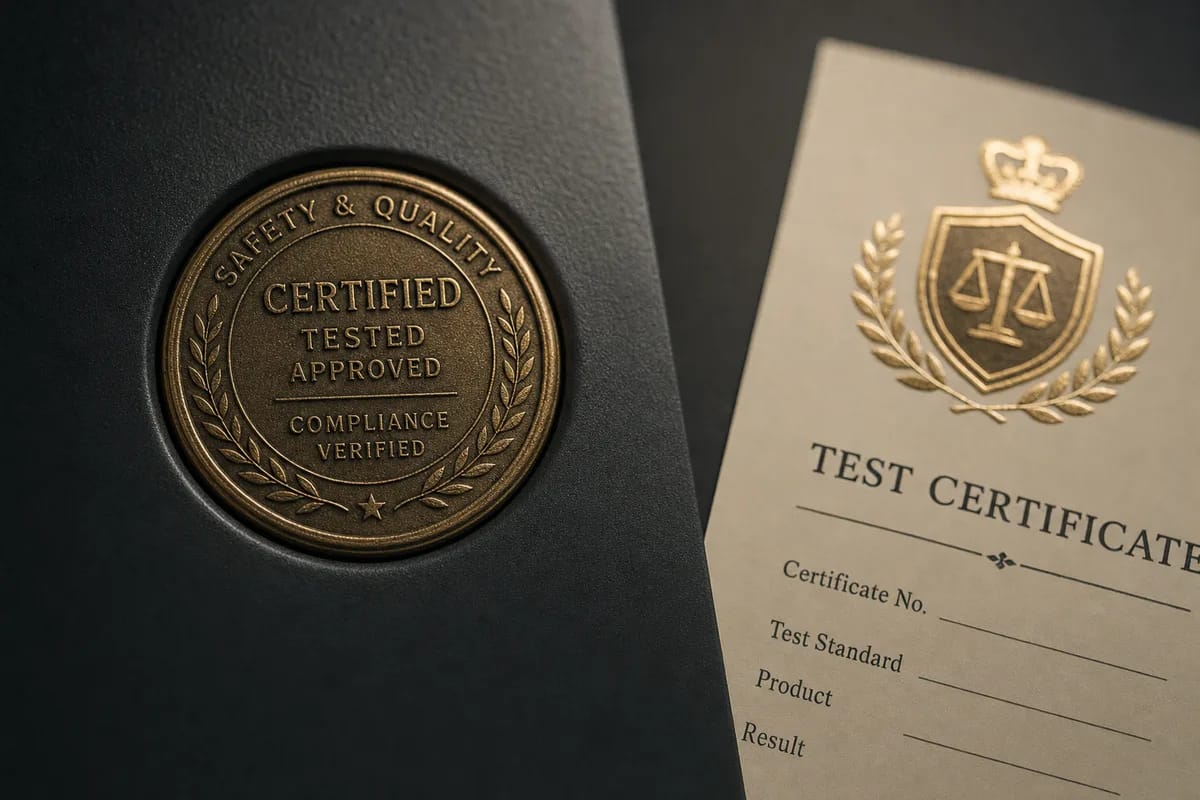
Both PAS 24 and LPS 1175 are granted by accredited certification bodies, not by the manufacturer. The certificate is evidence of an independent test outcome, not a self-assessed claim. The standards our doors are tested to are set out on our certifications page.
Does your current door qualify?
Many standard composite, timber or uPVC front doors do not meet PAS 24 or LPS 1175. They are built to weather and fire standards, not to a tested forced-entry threshold. Some composite doors carry PAS 24, but many do not, and the standard covers the door assembly only, not the frame or the installation.
To find out whether your current door qualifies, check:
- The manufacturer’s documentation. A tested door should come with a test certificate specifying the standard and the issuing body. Ask for it if it was not provided at installation.
- The certification body’s register. Both Secured by Design and the LPCB maintain publicly searchable product registers. If your door is certified, it should be listed.
- Your insurer. Ask your insurer directly which standards they recognise and what evidence they need to see. Different policies set different bars.
If you are replacing a door or considering an upgrade, ask the supplier to confirm the standard and name the certifying body before you commit. That is the right first step, and it is the question to put to us about any of the front door options we fit. A free site survey is the practical way to establish which security rating suits your property and risk level.
How do certifications affect your premium?
No insurer publishes a standard discount table for Secured by Design or LPS 1175 doors, and this guide will not quote figures that cannot be verified for your specific policy. As a general principle, insurers assess properties with third-party-certified security measures as lower risk, and lower risk tends to mean more favourable terms. How that applies to any one policy is a question only the insurer can answer.
The practical effect varies by insurer, property type, claim history and location. The most direct route to understanding the impact on your own premium is to ask your insurer before you buy. Many will confirm in writing whether a specific standard affects your terms. That confirmation then becomes part of the evidence base when you choose your door.
What a certified door does give you, regardless of any premium effect, is a verifiable security threshold. That is worth something on its own.
Not sure which standard your door needs?
A free site survey is the practical starting point. We assess your property, your existing door and your risk level, and we advise on the right certification standard for your property.
Book a free site survey or see the standards our doors are tested to.
Frequently asked questions
- Are there doors that are officially "insurance approved"?
- No insurer publishes an official approved-door list. They reference recognised security standards, primarily Secured by Design, PAS 24 and LPS 1175, and assess risk on whether a door meets them. Ask which standard a door is certified to and by which body, then check it on the relevant public register.
- What security standard does my home insurance require?
- Most home insurers reference PAS 24 as a baseline enhanced-security standard and may additionally specify Secured by Design. Policy wording varies, so call your insurer, ask which standards they recognise for enhanced-security doors, then match your door choice to that answer.
- What is the difference between Secured by Design and PAS 24?
- Secured by Design is a police-backed certification programme; PAS 24 is the British Standard that defines the minimum test threshold for enhanced-security door assemblies. Most Secured by Design doors must meet PAS 24, but a PAS 24 door does not automatically qualify for Secured by Design.
- What does LPS 1175 mean for a front door?
- LPS 1175 is a graded forced-entry resistance standard from the Loss Prevention Certification Board. For a residential front door, SR2 (opportunist deterrence) is the entry point most insurers treat as meaningful and SR3 (determined, tooled attack) is a significantly higher threshold. Our steel front doors are tested to SR3.
- Do PAS 24 doors reduce home insurance premiums?
- Some insurers offer improved terms for doors certified to PAS 24 or above, but none publish a fixed discount schedule: the effect depends on your policy, insurer and property. Ask your insurer in writing before you buy; a certified door gives you the evidence to have that conversation.