Front doors
How much does an aluminium front door cost?
In short
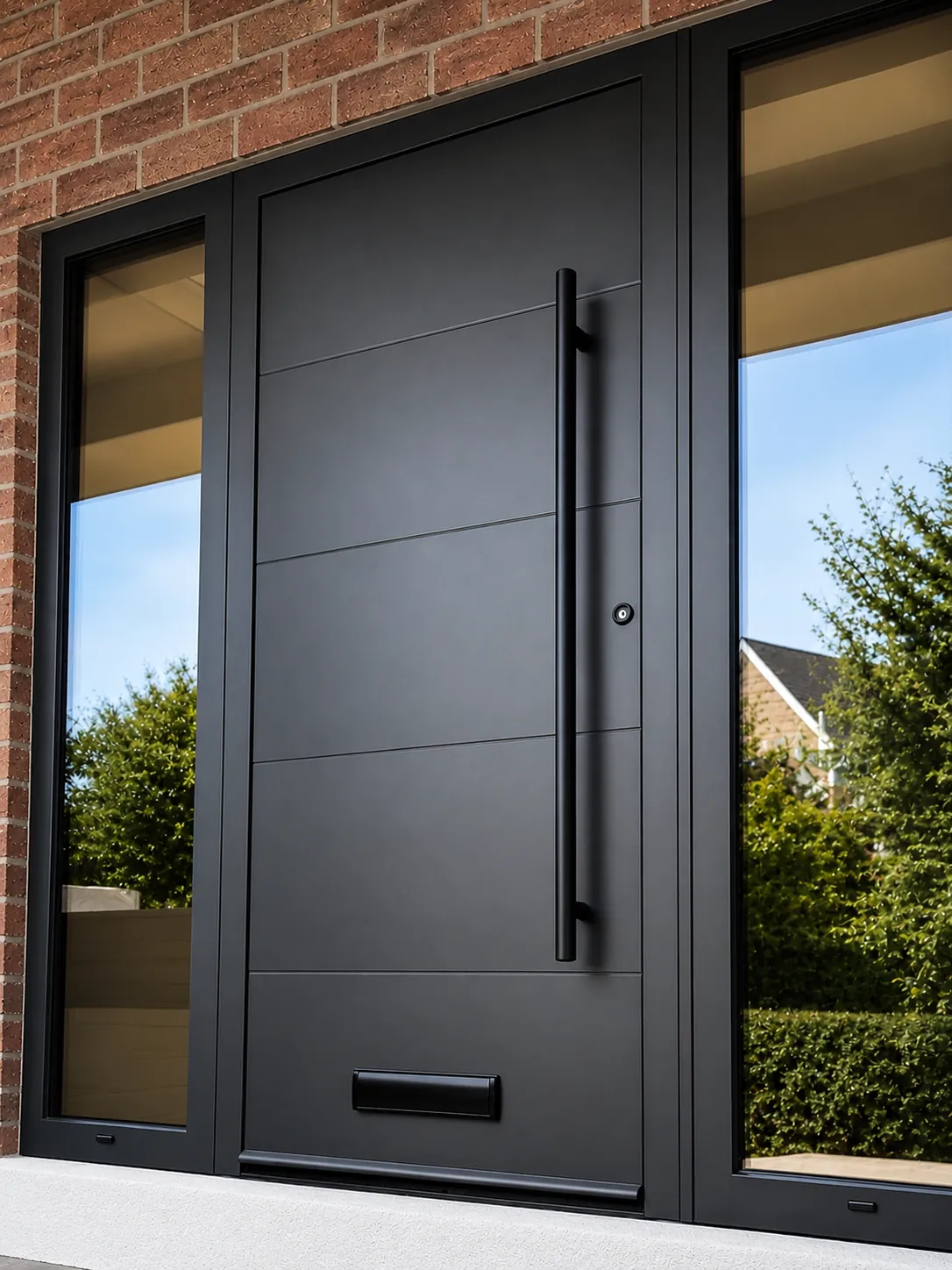
There is no fixed price for an aluminium front door. Every one is made to measure and quoted in writing after a free survey. The figure is set by the size of the opening, how much of it is glass, the frame and thermal break specification, the security class, the finish, the hardware and access control, and the installation. Configuration usually moves the price more than the leaf itself.
Key takeaways
- Aluminium doors are quoted after a survey, never from a price list, because every opening and specification is different.
- Glazed area, sidelights and overall span are the drivers that move an aluminium quote most, because those are the things aluminium is usually chosen for.
- Security class, thermal break specification, finish, hardware and access control each add to the figure, and each should be named in the quote.
- A comparable quote is all-in: survey, leaf and frame, glazing, threshold, locking, removal of the old door, installation and making good.
An aluminium front door is priced after a survey, not from a list. What moves the figure is the size of the opening, how much glass you want, the frame and thermal break specification, the security class, the finish, the hardware and the installation. This guide explains each driver so you can read a quote properly.
For the construction detail behind those drivers, the aluminium front door range and specification page sets out the frame, core, locking and glazing in full. If you are comparing materials rather than pricing one, our guide to what a new front door costs in London covers steel, pivot and bespoke alongside aluminium. This page stays on aluminium.
What actually drives the price?
Seven things, in roughly the order they move the figure:
- The span. How wide the opening is, and whether the door is a single leaf, a leaf with a sidelight, or a wider frame carrying several panels.
- The glazed area. How much of the door and surround is glass, and what type of glass it is.
- The frame and thermal break specification. The profile that carries the leaf and the insulating barrier inside it.
- The security class. PAS 24 tested construction as standard, with higher resistance classes available.
- The finish. Powder coating in any RAL colour, inside and out, with dual colour and wood-effect options.
- The hardware and access control. Handles, cylinder, and whether you want fingerprint, keypad or smart entry.
- The survey and installation. Measuring the opening, fitting the frame into it properly, and making good.
There is a pattern worth knowing before you read any quote. On a steel door, the security specification is usually what sets the price. On an aluminium door it is more often the configuration, because aluminium tends to be chosen for the things that cost money: width, glass and slim sightlines. Two aluminium doors at very different prices can carry identical locking and an identical rating, and differ only in how much of the front of the house they occupy.
How much difference does the glazing make?
Enough that it is worth deciding early.
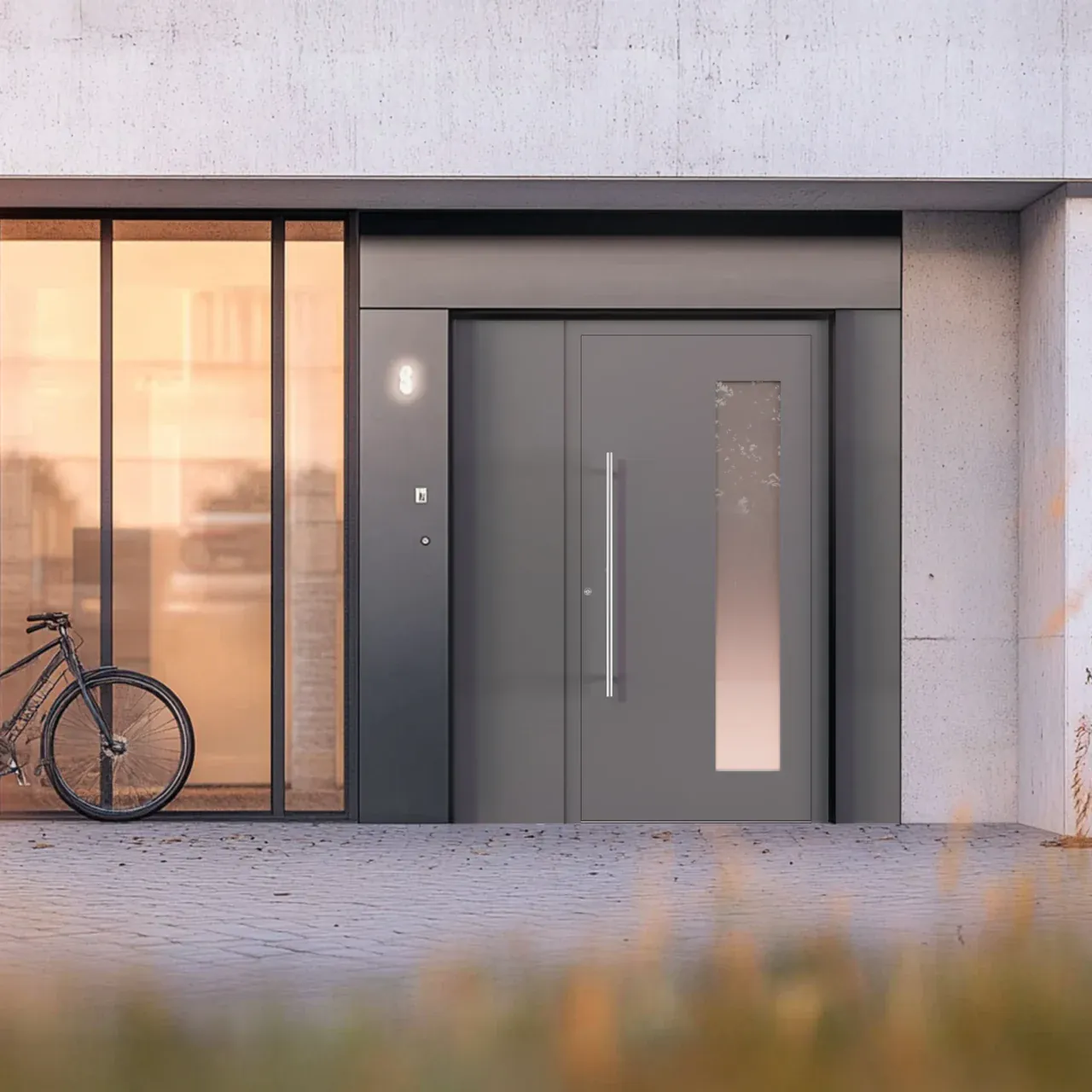
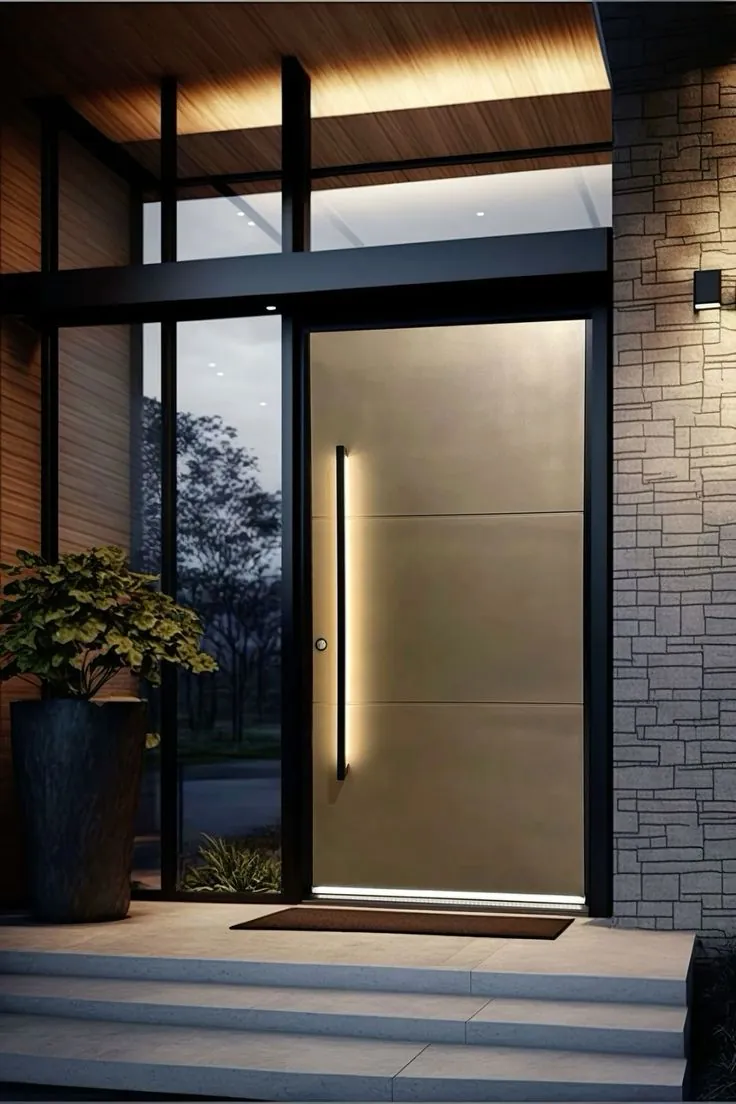
Glass is not a finishing touch on an aluminium entrance. It is usually the reason aluminium was specified in the first place. A thermally broken aluminium frame is strong and stable at slim sightlines, so it carries larger glazed panels and full-height sidelights that other materials struggle with. That capability is what you are paying for when the glazed area grows.
Three parts of the glazing decision affect the figure:
The area. A vision panel, a vertical light, a half-glazed leaf and a full-height glazed surround are four different amounts of glass and four different frame jobs.
The glass type. Laminated security glass, obscured or etched glass and decorative glazing all sit at different points. Where security glazing is specified, it is tested as part of the doorset rather than fitted into it afterwards, which is the point of specifying it that way.
The surrounding panels. A sidelight or a transom turns a single-door project into a frame and multiple panels. That is more aluminium, more glass, more sealing and more time on site.
Does the security class change the cost?
Yes, and it should.
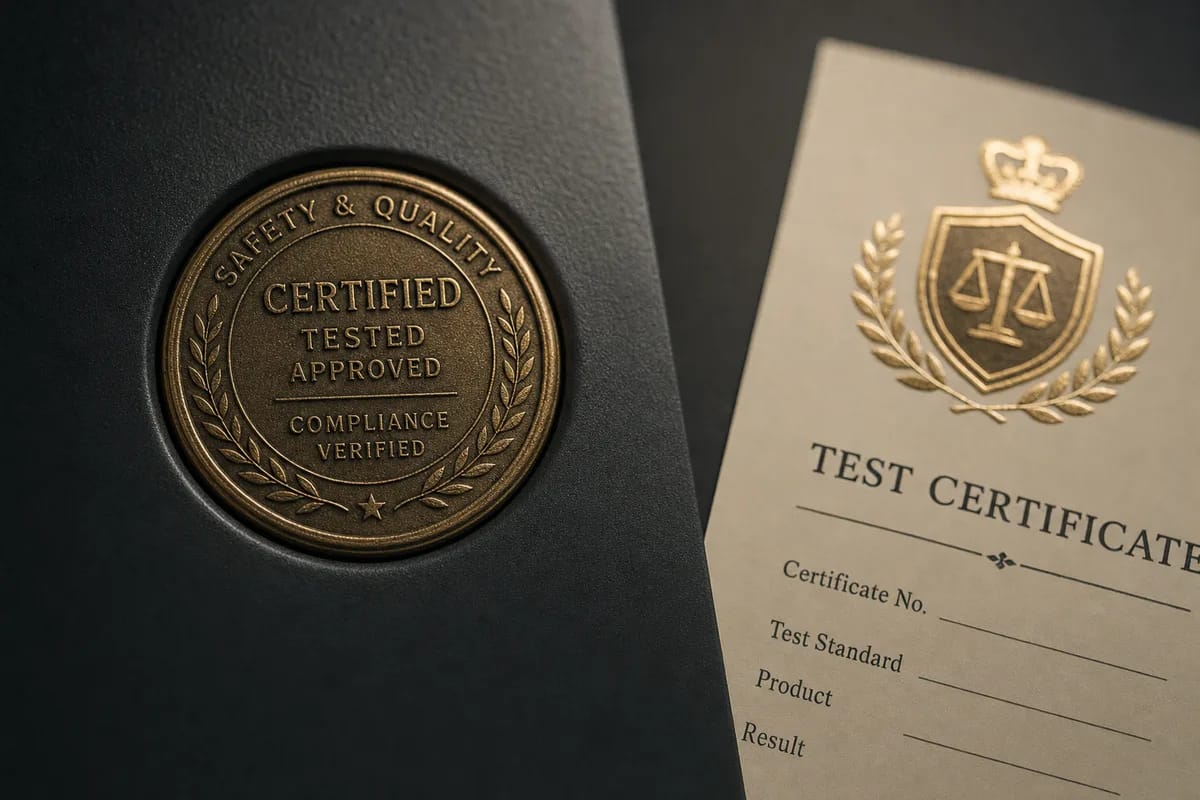
Our aluminium doors are built as PAS 24 tested construction, with RC3 configurations available under BS EN 1627 and RC4 on request. Those resistance classes are not descriptions. They are the result of a door being attacked under controlled conditions with a defined tool set for a defined length of time, and a door built to hold at a higher class uses more material and more engineering to do it.
So a door specified to a higher class costs more than one that is not, in the same way a thicker wall costs more than a thinner one. What it buys you is a rating someone else has tested, rather than an adjective. The standards we build and test to, and what each one means, are set out on our certifications page.
The practical version of this decision: most homes do not need the top of the scale. At the survey we look at the property, the street, the frontage and anything your insurer has asked for, and recommend the class that fits rather than the one that sells.
What does the thermal break add?
A thermally broken frame puts an insulating barrier between the outside face of the aluminium and the inside face, so the metal does not carry cold straight through the door. Paired with an insulated core and a full perimeter seal, that is what gets an aluminium door to a U-value as low as 0.8 W/m²K.
It is part of the frame specification rather than an extra, and it is one of the differences between an aluminium entrance door built for a home and a lighter commercial-style frame that happens to be aluminium. If a quote is noticeably lower than the others in front of you, the frame profile and the thermal break are the first things worth asking about.
The exact figure for your door is confirmed in writing at the survey, because it depends on the glazing and the configuration as much as on the frame.
Where do finish, hardware and access control fit in?
These are the details that make the door yours, and they sit at the end of the quote rather than the start of it.
Finish. Powder coating in any RAL colour, inside and out, including a different shade facing the street. Black and anthracite are the colours we fit most.
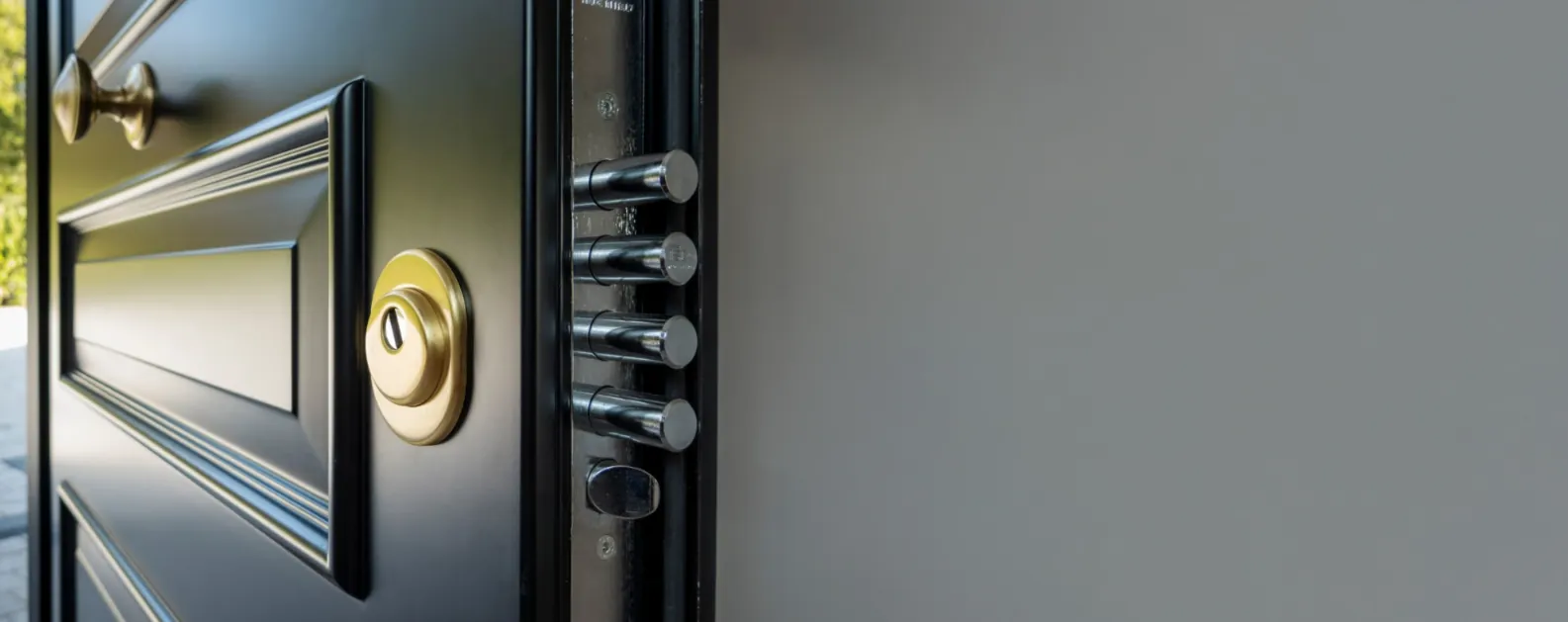
Hardware. Pull handles, lever sets, knobs and letterplates across brass, bronze, chrome, nickel and black finishes. The visible furniture is a design choice; the multi-point locking and anti-drill, anti-pick cylinder underneath it are the parts that were tested.
Access control. Fingerprint entry, keypad access and smart locking can all be specified with the door. They are wired in as part of the installation rather than added afterwards, so the reader, the power and a backup entry method are planned at the survey. Our locking and access options page covers how each one is fitted.
Does aluminium cost more than steel?
Not in a way that generalises, which is why comparing the two by price alone rarely settles anything.
The two materials sit close together and move for different reasons. Steel is driven by the security rating and the milling profile cut into the face. Aluminium is driven by span and glazed area. A modest steel door in a standard opening can cost less than a wide aluminium entrance with a full-height sidelight, and a plain aluminium leaf can cost less than a heavily milled steel door rated to a higher class. Only once both are specified for your actual opening does the comparison mean anything.
Choose on what the door has to do. Steel leads on outright resistance and suits period profiles. Aluminium leads on slim sightlines, large glazed panels and contemporary frontages, and still holds a tested resistance class. If you are weighing materials rather than pricing one, our comparison of composite and steel doors covers where each material’s security ceiling sits.
What should an aluminium door quote cover?
An honest quote is one number for a finished job, and it follows a survey.
It should name, in writing:
- The survey, and the measurements it was based on.
- The leaf and the thermally broken frame, made to the surveyed opening.
- The glazing type and configuration, including any sidelight or transom.
- The threshold, the sealing, the multi-point locking, the cylinder and the hinges.
- The security class the door is built and tested to.
- The finish, by RAL reference, inside and out.
- Removal of the existing door, installation, and making good around the opening.
Two things are worth checking before you compare one quote with another. A supply-only price and a supply-and-fit price are not the same number, and fitting a made-to-measure frame into a London reveal is skilled work that takes time. And a price given without a survey is an estimate wearing a quote’s clothing, because nobody can price a reveal they have not measured.
Our own sequence is survey, design, manufacture, install, aftercare, with one team answering for the whole job across London and the Home Counties, and the price fixed in writing before the order.
Ready to find out what yours would cost?
Book a free site survey. We measure the opening, talk through the glazing, the finish, the hardware and the security class that suits your home, and put a written quote in front of you covering the whole job.
Book a free site survey, or see the aluminium range and specification first.
Frequently asked questions
- Why do aluminium front door prices vary so much?
- Because the doors are not the same product. A single flush leaf in a standard opening and a wide entrance with a full-height glazed sidelight are different amounts of aluminium, glass, engineering and installation time. Every door is made to measure for the opening it was surveyed in, so the price follows the specification rather than a catalogue line.
- Does more glass make an aluminium front door more expensive?
- Usually, yes. Laminated security glass costs more than a solid panel, and a larger glazed area or a full-height sidelight asks more of the frame that carries it. Aluminium is often chosen precisely because it can carry that glass on slim sightlines, so glazing is one of the biggest single variables in an aluminium quote.
- Does a higher security class add to the price?
- Yes. Our aluminium doors are PAS 24 tested construction, with RC3 configurations available under BS EN 1627 and RC4 on request. A higher resistance class means more material, more engineering and testing against a tougher attack, and that shows in the figure. We talk through which class suits your home at the survey.
- What is included in an aluminium front door quote?
- The survey, the made-to-measure leaf and thermally broken frame, the glazing, the threshold, the multi-point locking and cylinder, the hinges, removal of the existing door, installation and making good around the opening. Any quote that separates supply from fit is not a comparable number.
- Can you give me a price over the phone?
- Not an accurate one. The opening, the reveal depth, the condition of the lintel and existing frame, access and the specification you choose all change the figure. We survey at no charge, measure on site and put the price in writing before anything is made.
- Is an aluminium front door less expensive than a steel one?
- Not reliably. The two materials sit close to each other and move for different reasons: steel by security rating and milling, aluminium by span and glazed area. A modest steel door can cost less than a wide glazed aluminium entrance, and the reverse is just as common. The comparison only becomes real once both are specified for your opening.