Front doors
How much looking-after does a steel front door need?
In short
Very little. A steel front door is powder-coated over galvanised steel, so there is no repainting, no swelling and no warping. What it does want is a wipe of the finish, a check that the locking, hinges and seals still move and close cleanly, and a look at the glazing. Anything that needs adjusting is a job for the installer, not a screwdriver at home.
Key takeaways
- A powder-coated steel door needs no repainting, sanding or sealing: warm water and a soft cloth handle the finish.
- The moving parts matter more than the surface, so the locking points, hinges and cylinder are what you keep an eye on.
- Seals, the threshold and the glazing are the quiet ones, and a new draught is usually the first thing you notice.
- A door that needs a shove or a lift before it will lock is telling you something, and that is a call rather than a DIY adjustment.
Not much, and less than most front doors. A steel front door is galvanised steel under a powder-coated finish, so it does not rot, swell, warp or need repainting. What it asks for is a clean finish and moving parts that still move freely: the hinges, the multi-point locking, the cylinder and the seals.
That is by design. The construction that makes a steel front door resist forced entry, a galvanised leaf and frame around an insulated core, closed by multi-point locking, is also the construction that shrugs off British weather. What follows is what to do, what to watch for, and what to leave alone.
What does a steel door actually ask of you?
Five things, in rough order of how often they come up: the finish, the hinges, the locking and cylinder, the seals and threshold, and the glazing. None of it is difficult and none of it needs tools.
The point of the exercise is not really the cleaning. It is noticing early when something has started to behave differently, because a door caught early is usually adjusted rather than repaired.
How do you look after the finish?
Warm water, a mild detergent and a soft cloth. Rinse it, dry it, done.
A powder-coated finish is a cured coating bonded to galvanised steel, not a paint film sitting on timber. It is sealed, it holds its colour outdoors, and it does not want sanding, sealing, waxing or polishing. What it does want is to be kept clear of the grit and road salt that settle on any door facing a London street, because those are abrasive and they gather in the corners and the milled detail.
Two things to keep away from it. Abrasive pads and scouring creams dull the surface. Solvent-based cleaners attack it. If a mark will not come off with detergent and patience, ask before reaching for anything stronger.
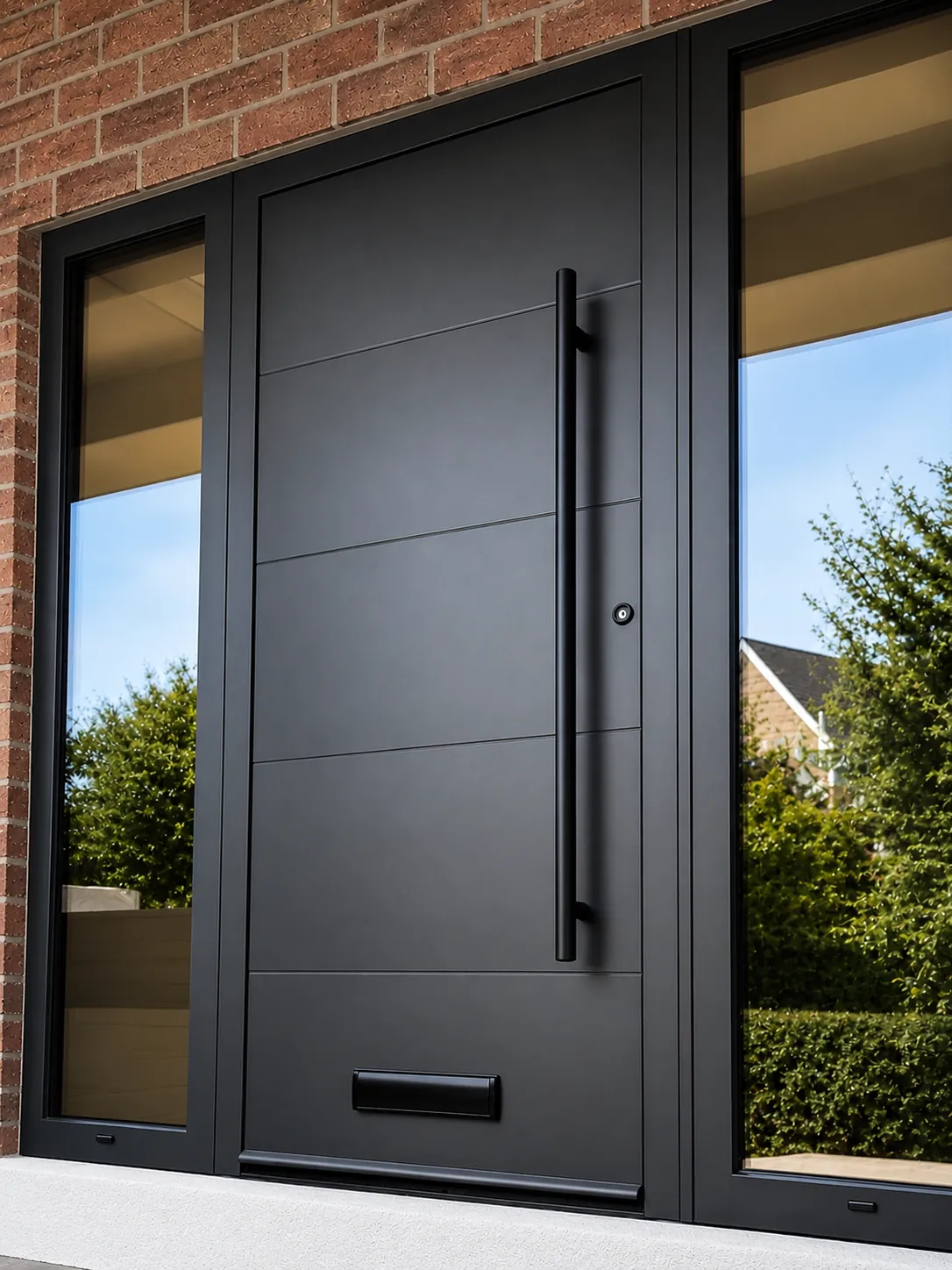
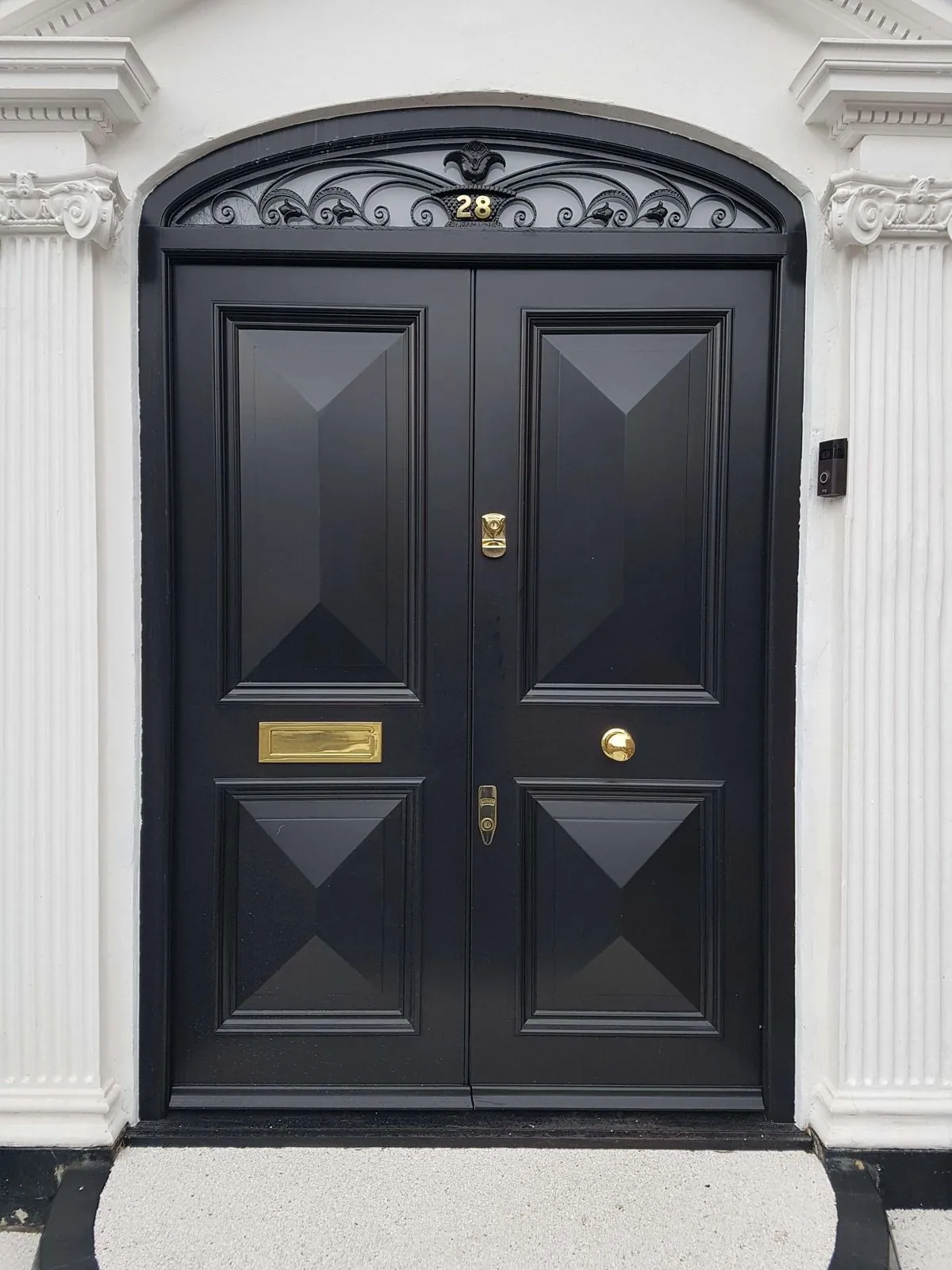
Black and anthracite are the finishes we fit most, and darker colours show dust and water spotting long before they show any wear. That is cosmetic, not a fault.
What do the hinges, locking and cylinder need?
This is the half that matters. A steel doorset is heavy, and everything that carries or bolts that weight is engineered for it, but hardware always works better for being kept moving.
Hinges. On our steel doors the hinges are concealed, with dog bolts on the hinge side that engage as the door closes. There is nothing to take apart and nothing to see. What you are checking is behaviour: does the door swing without dragging, sit square in the frame, and close without needing a hand on it.
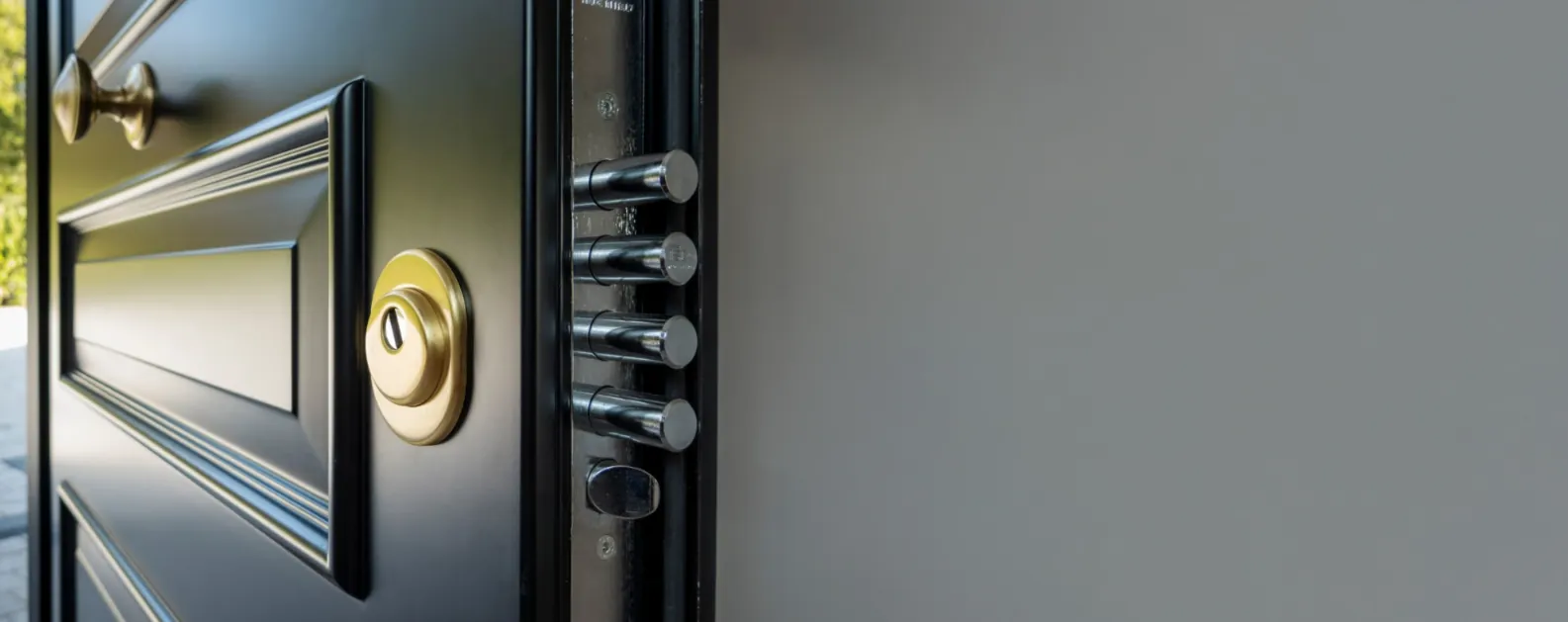
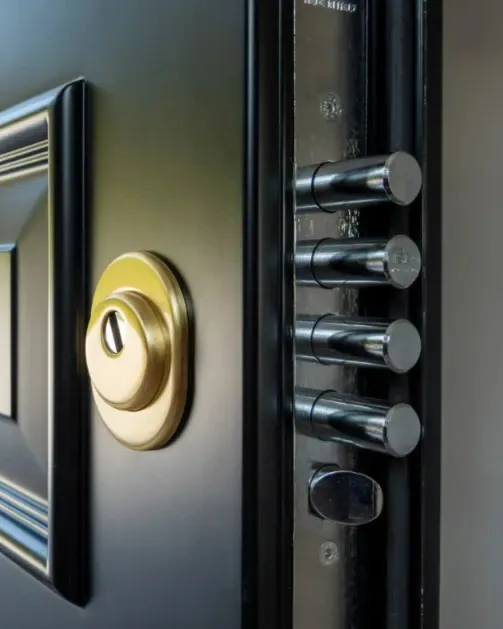
Locking. The multi-point locking throws bolts at the top, the base and the hinge side. With the handle lifted and the key turned, every one of them should throw fully and withdraw cleanly, without grinding and without you leaning on the door. If you find you are pulling the door towards you before the key will turn, that is the moment to make a note of it.
The cylinder. Keys pick up grit in a pocket and carry it into the cylinder, and a stiff or gritty key is usually the first sign of it. Cylinders and locking gear do benefit from occasional lubrication, but the right lubricant depends on the hardware on your door, so ask us which one suits yours rather than using whatever is in the cupboard. The wrong product can gum up a cylinder that was working perfectly well.
What about the seals, threshold and glazing?
The quiet ones. You rarely look at them, and they are usually what tells you something has changed.
The threshold on our steel doors is stainless steel with double rubber seals, and the seals are what keep weather and draughts out once the door is shut. Brush the threshold out now and then, because grit collects in it and grit is what wears a seal. Run a finger along the seals as well: they should feel soft and springy rather than flattened, torn or hardened. A new draught, a whistle in the wind, or daylight at an edge all mean the door is no longer closing on its seals the way it did.
Glazing on a steel security door is laminated security glass, tested as part of the doorset rather than dropped in afterwards. Clean it as you would any other window, with a non-abrasive cleaner and a soft cloth, and keep blades, scrapers and abrasive pads off it. While you are there, check the beading and the seal around the glass are intact. A chip or a crack in laminated glass is not a pane you swap out on a Saturday, because the glazing is part of what the door was tested as. That one is a call to us.
What should you check when the season turns?
There is no schedule to keep to. If you want a rhythm for it, a look over as the seasons change is a sensible one, and it takes a few minutes.
- Open and close it slowly. Listen for a noise that was not there before, and feel for a new drag.
- Lift the handle and turn the key. Every bolt should throw and withdraw cleanly.
- Run a finger round the seals, and look at the threshold for trapped grit.
- Look along the outside edges and the glazing beads for chips or damage.
- Stand inside with the door shut on a bright day and look for daylight at the edges.
Autumn is the one worth picking if you only do it once, because anything you find before the wet and the cold arrive is easier to sort out than anything you find in the middle of it.
When should you stop and call someone?
Some things are a note for next time. These are not.
- The door needs a lift, a shove or a pull before it will lock.
- A bolt will not throw fully, or throws and will not withdraw.
- The key is stiff or gritty, or turns part of the way and stops.
- A new draught, a whistle, or daylight where there was none.
- Damage to the glazing, or damage to the finish that has gone through to bare metal.
- Anything at all after an attempted break-in, even if the door held. Especially if the door held.
That last one is worth dwelling on. A doorset that has taken an attack has absorbed force through the frame, the hinges and the bolts, and it deserves to be looked at rather than assumed to be fine because it is still shut.
On cover, the guarantee terms for our doors are set out on our certifications page: “The guarantee covers faults in the door, its finish and its hardware, together with the workmanship of our installation. Normal wear, accidental damage and misuse sit outside it, as they would with any door guarantee.”
What should you not do to a steel front door?
A short list, and the reasons matter more than the rules.
- Do not pressure wash it. Drive water at a doorset under pressure and you push it past seals that were built for weather, not for a lance.
- Do not use abrasive pads, scouring creams, wire wool or solvent-based cleaners on the finish.
- Do not paint over a powder-coated door with an off-the-shelf tin. The finish holds its colour outdoors without repainting, and where a coating is genuinely damaged it can be recoated in the same RAL rather than started from scratch. That is work to put to us, not a weekend job.
- Do not adjust hinges, keeps or shoot bolts yourself. A certified doorset is tested as a configured assembly, with the leaf, frame, hinges, locking and glazing all set to work together. Move one part and you change how the rest behaves, and there is no way to test it afterwards.
- Do not swap the cylinder for one off a shelf. The cylinder is part of the tested doorset. Ours are anti-drill and anti-pick and can be upgraded, and an upgrade is a conversation rather than a substitution.
- Do not keep using a door that is sticking. A door that needs forcing wears something every single time it is forced.
Can someone else look after it for you?
None of the above needs a specialist. All of it needs someone to actually do it, which is the part that slips.
If you would rather someone else kept an eye on it, aftercare is available. Ask us for a quote.
If you are still choosing a door rather than looking after one, two pieces are worth reading first: how to choose a steel front door for a London home, and how steel compares with composite over the life of a door, which is where the upkeep question usually starts.
Either way it begins in the same place. Book a free site survey and we will talk through the door, the opening, and what it will ask of you once it is in.
Frequently asked questions
- How do you clean a steel front door?
- Warm water, a little mild detergent and a soft cloth, then rinse and dry. The powder-coated finish is sealed, so it does not want abrasive pads, scouring creams or solvent-based cleaners, and it does not need polishing or waxing to hold its colour.
- Do the locks and hinges on a steel security door need lubricating?
- The moving parts do benefit from occasional lubrication so that the multi-point bolts, hinges and cylinder keep working smoothly. The right lubricant depends on the hardware fitted to your door, so ask us which one suits yours rather than using whatever is to hand.
- Can a steel front door be repainted?
- It should not need to be. The powder-coated finish holds its colour outdoors without repainting, so most doors never need it. Where a coating is genuinely damaged it can be recoated in the same RAL rather than started from scratch, but that is work to put to us rather than an off-the-shelf tin.
- What are the signs a steel front door needs attention?
- It needs a lift or a shove before the key will turn, a bolt will not throw fully, the key feels stiff or gritty, there is a new draught or daylight at an edge, or the glazing is chipped or cracked. Any of those is worth a call rather than a wait.
- Should I adjust the hinges on a certified steel doorset myself?
- No. A certified doorset is tested as a configured assembly, with the leaf, frame, hinges, locking and glazing set to work together, so adjusting one part changes how the rest behaves. Leave adjustment to the people who surveyed and fitted it.
- Do you offer an aftercare service?
- Yes. Aftercare is available, and we quote it rather than publish a price. Ask us and we will come back to you.